 Almost every model of different types of household appliances consume a different amount of electricity.
All this depends on the purpose of household appliances, and the rated power of the device.
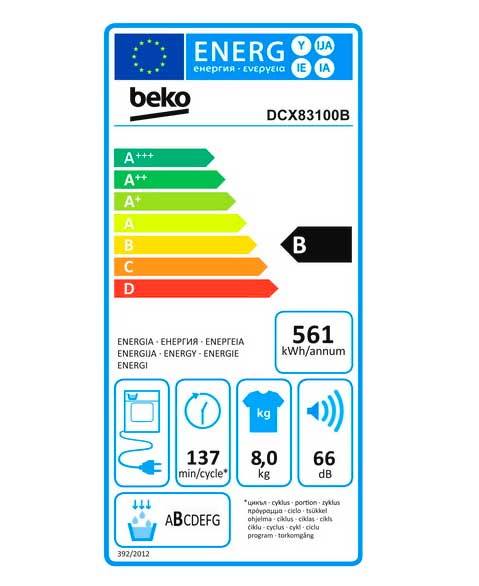
In order to find out exactly what power consumption your washing machine needs, you need to look at the label that is located on the back of the device.
This can be done by each user of such a device, because this parameter is indicated, as a rule, in kilowatts / hour. It determines to which class of economic devices your business belongs. washing machine.
Classification of washing devices
Such signs are usually placed on special stickers on the body of your product. On the manufacturer's website you can find a complete description of the characteristics with the obligatory indication of efficiency. In order to find out what the efficiency of this device is, a special study is carried out, after which a certain class is assigned to the device.
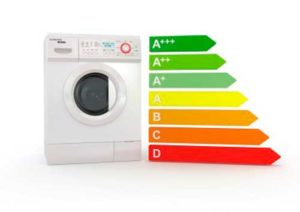 The most economical devices are of the class "A++» is the minimum electricity consumption, which reaches 0.15 kilowatt / hour per 1 kilogram.
- Less economy classA+”, it consumes a little less than 0.17 kilowatt / hour per 1 kilogram.
- Class "BUT” is the middle class, which consumes energy in the range from 0.17 to 0.19 kilowatt / hour for washing a kilogram of laundry.
- But the products with the letters “AT” will already consume from 0.19 to 0.23 kilowatt / hour for the same operation.
- Energy class “FROM” a rather high bar for energy consumption - from 0.23 to 0.27 kilowatt / hour per kilogram of washing.
- Washing device with letter D consume under the same conditions from 0.27 to 0.31 kilowatt / hour.
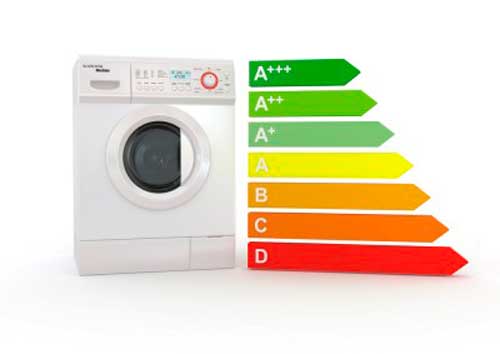
It makes no sense to list further, since modern technology with worse performance no longer uses and does not produce such classes that require much more power consumption, which is very convenient for modern users.
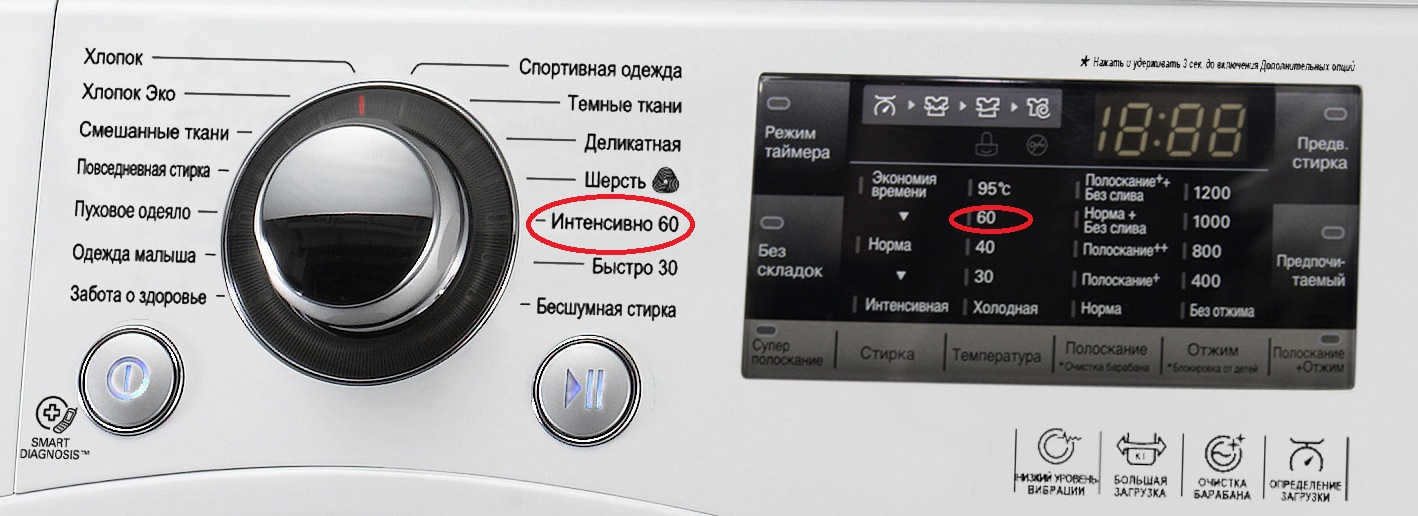 During the experiment, washing takes place at 60 ° Celsius with a maximum load, and, as a rule, the linen that is used for research is cotton, but in real life everything is a little different, because this parameter may even be different, but the rule is smaller .
Varieties of household washing machines
All household washing machines for washing at home are divided into the following main criteria:
 How to load laundry.
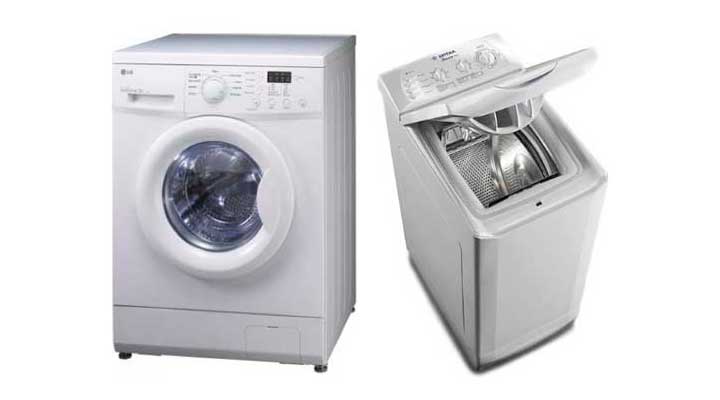
It could be like frontal, and the vertical way.
The top-loading option is much more economical because it is a small device, but it can only meet the needs of small families.
 drum capacity.
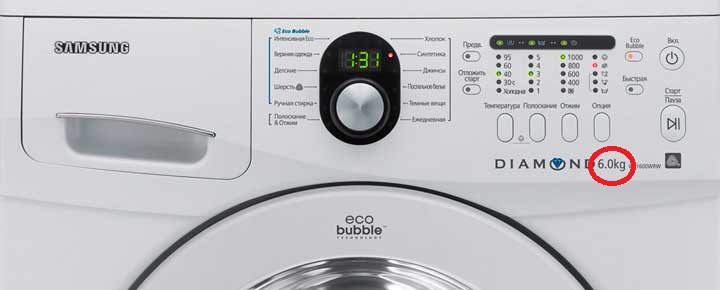
This parameter has a direct impact on the operation engine washing machine, so if you choose a washing machine for washing with a lot of laundry, I advise you to pay close attention to what class it has so that you can choose the most economical model.
- Washing machine size.
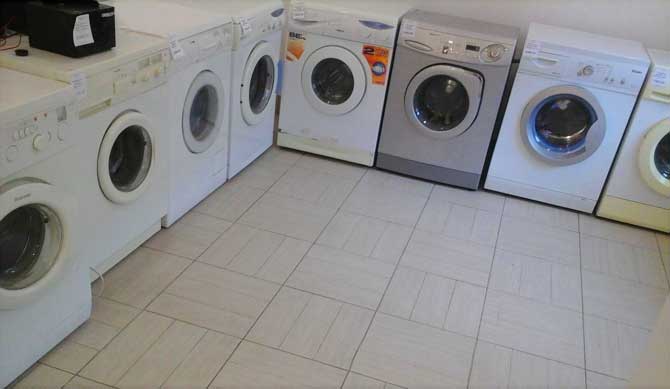 As a rule, they fluctuate from the size of the load, but manufacturers have already learned how to produce rather small-sized models with a large load, and the depth of the model will be only 0.4 m, and as a rule, consumption class "A". Let's say a Bosch washing machine, the price of which is 15,000 rubles. That is why, when buying your home assistant, try to pay attention to the main characteristics of the technical plan in order to know exactly what the consumption of your washing machine will be at maximum load.
Realistic energy consumption will depend on the following factors:
 washing mode.
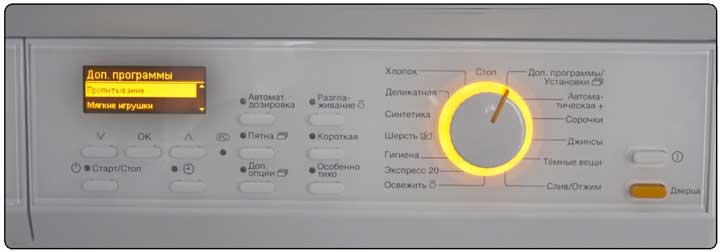
The temperature of water heating, the duration of the rinse, the duration of the wash itself, the number of cycles, the speed of rotation of the drum, as well as the use of additional options will depend on it.
- Fabric type.
Let's say washing cotton or linen will require a lot more energy than washing standard polyester items, because these are different fabrics that differ in weight, both dry and wet, so this is also worth considering.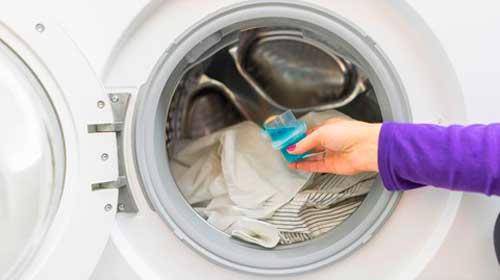
- Loading capacity.
It can be maximum, or only half, but of course, the more loaded the tank, the more electricity will be required to wash your things.
Laundry cost
The average power of advanced washing machines varies from 0.5 to 4 kilowatts, but most often consumers like to buy appliances with class "A", which consume electricity per wash cycle from 1 to 1.5 kilowatts. This is due to a fairly low price, because for a higher energy class it will be necessary to pay much more.
With regular washing three times a week during each wash cycle of 2 hours, the consumption of electrical energy will not exceed 36 kilowatts per month.
 In order to calculate at least approximately how much 1 wash cycle will cost any user, you need to take into account many nuances: areas of residence, city or hotel, there are also special tariffs for those citizens who use stationary electric stoves instead of gas appliances. It is worth considering the fact that the region's payment rates are calculated daily at 4.6 rubles per kilowatt, and at night 1.56 rubles for the same use, so you understand that washing at night is much cheaper.
Do not forget also that washing devices consumes water, for which you should also pay, but not everyone knows how many liters their assistant will be able to spend for 1 wash cycle, and despite the fact that as the utility bill grows, this is far from an unimportant point.
Thus, the average consumption will be approximately 60 liters per wash.
So, with washing three times a week, if you live in the region, we get the result of washing:
- in the daytime for the whole month will cost you 166 rubles.
- night will cost no more than 58.
If you live in other regions, then you should recalculate everything in accordance with your communal prices, but I assure you that the amount will be much less, because living in the capital is much more expensive than in a quiet, calm suburb or neighboring region.