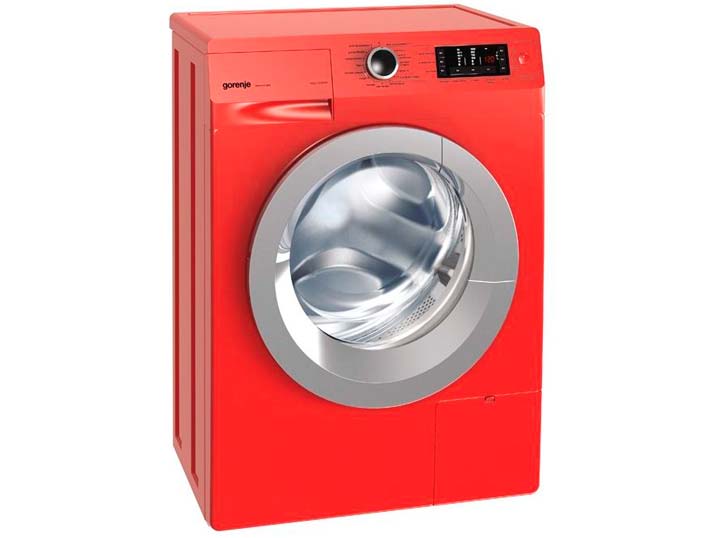
 The power of the energy consumed depends on the purpose of the washing machine and its rated power.
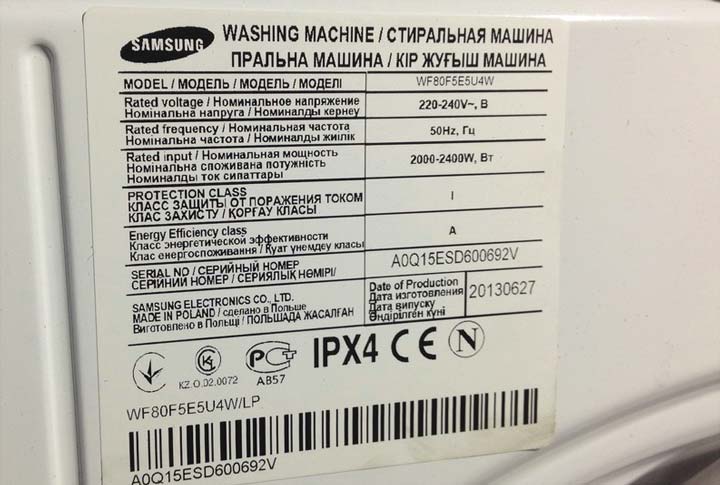 In order to find out how much power a particular model consumes, you need to find a sticker on the back of the household appliance.
We need a parameter in kWh, which determines the economic class of the device.
Washing machine economy classes
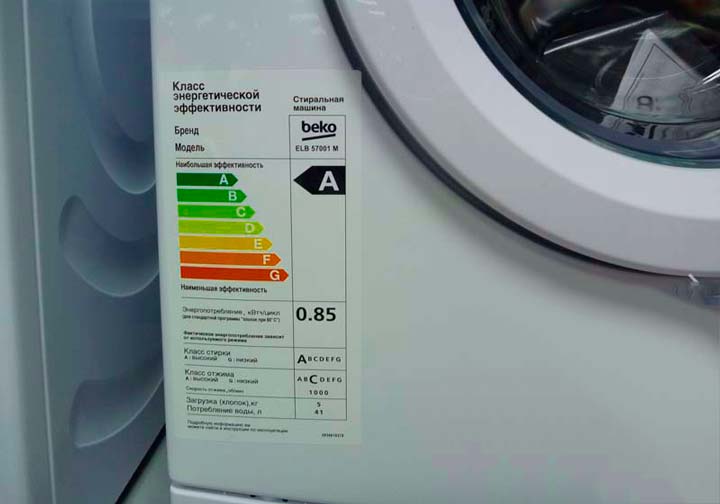
How much power your washing machine consumes depends on which energy consumption class she applies.
All devices are designated in Latin letters from A to G. For example, the letter "A ++" means that you have the most economical model in terms of energy consumption.
Usually, this information is pasted on the body of the device; you can also find complete information about a specific household model on the official website of the manufacturer. For example, power information washing machine samsung found on the Samsung website.
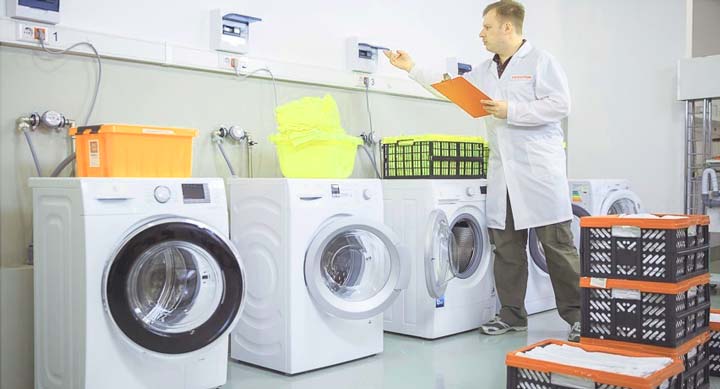 The parameter is measured during washing at 60 degrees with a full load of cotton laundry.
Based on the experiment, the unit is assigned the appropriate class:
- "A++" is the minimum electricity consumption of 0.15 kWh per kg of laundry;
- for class "A +" electricity consumption is slightly higher than for "A ++" - 0.15 - 0.17;
- the average type is considered "A", which consumes from 0.17 to 0.19 kilowatts;
- marking "B" - within 0.19-0.23;
- class "C" device consumes 0.23-0.27;
- a car with the letter "D" under the same conditions consumes electricity from 0.27-0.31.
What determines the power of the washing machine
The consumed power of the washing machine consists of the consumed energy of its main components:
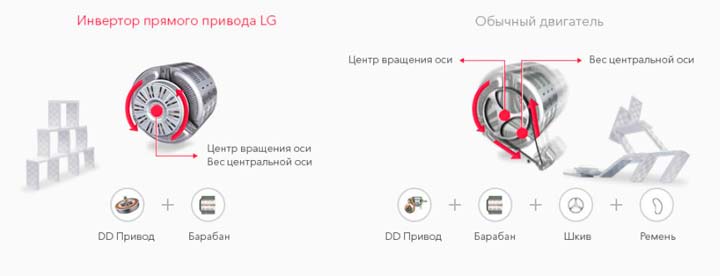 Engine twists drumThe higher the RPM, the higher the consumption. In addition, there are several types of engines:
- asynchronous with a power of not more than 400 watts, which are currently no longer used, but in the old unit, it is likely that such an engine is installed;
- all new models work on collector and inverter motors, which consume up to 800 watts depending on the choice of washing.
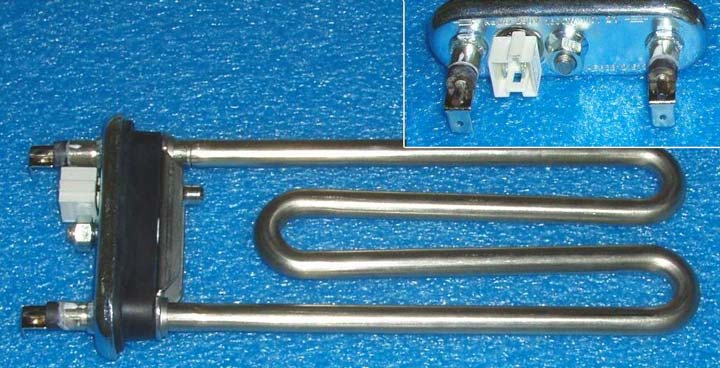 Consumes the most energy heating element, it is he who heats the water to the desired temperature. Power heating element equal to 2.9 kW.
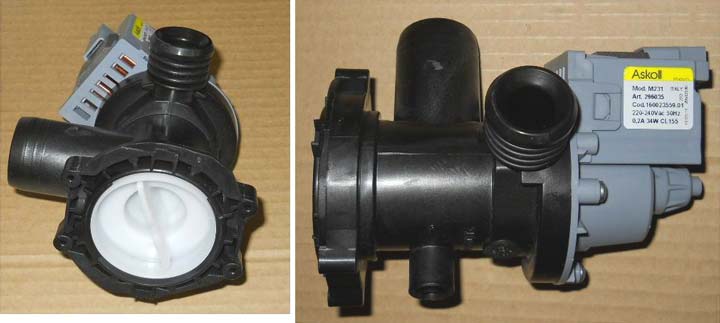 Another energy-consuming part of the washing machine - pump, which pumps out water several times during washing and rinsing. The device consumes up to 5 watts when mechanically controlled, and if your washing machine has an electronic display, the consumption doubles.
When buying a washer, pay attention to:
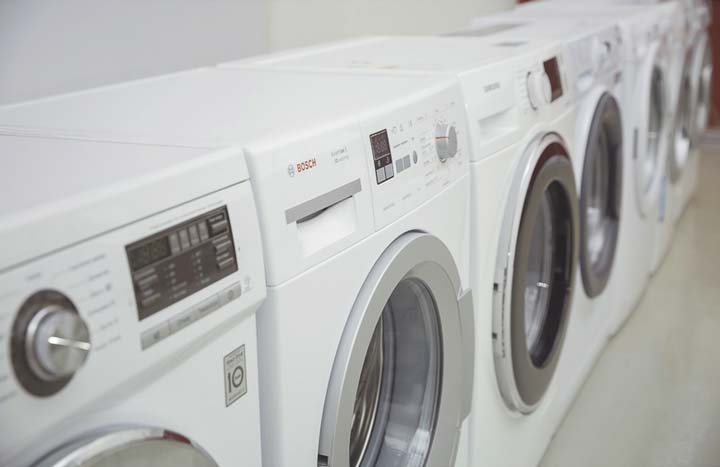 top loader linen is more economical due to its small size, but it is also suitable for a small family;
- if a capacious drum is important to you, then you should study all models with a large drum and choose the one with the most economical class;
- when choosing dimensions, be guided by the load of linen, which will further satisfy your needs, for example, small-sized washing machines with a depth of 40 cm with a load of 4.5 kg of linen are already being produced, washing power consumption is class “A”.
What else depends on e. washing machine capacity?
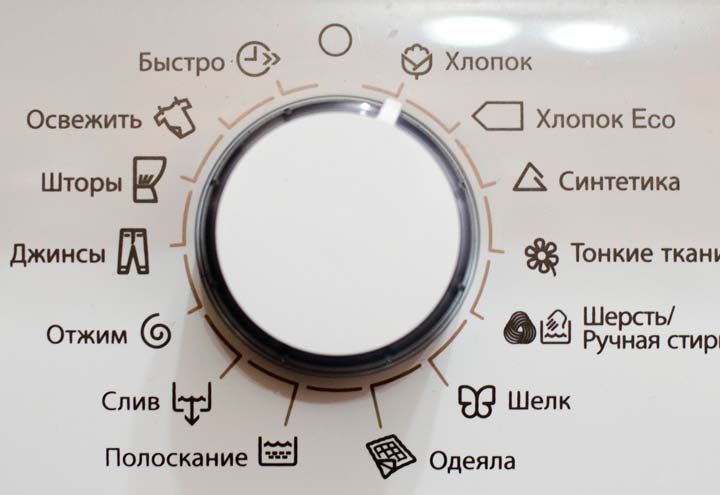 The power consumption directly depends on the choice of the washing mode. Consumption increases temperature water heating, washing duration, rinsing time, spinning speed of the drum, additional functions.
- Polyester will require much less energy to wash than cotton and linen. In addition, these fabrics differ significantly in dry and wet weight.
- The larger the tank load, the higher the electricity consumption.
How much is washing power in kW?
Modern washing machines consume on average from 0.5 to 4.0 kilowatts. Class A equipment is the most common due to the excellent combination of quality and affordable price, its consumption is from 1.0 to 1.5 kW. A higher class, for example, "A ++" will cost much more.
 On average, a family consumes 36 kilowatts per month, subject to two hours of washing three times a week. To calculate the cost of one particular wash, you need to know the electricity rates in your area.
For example, outside the city, prices are much lower, especially if it is a village or a village. In cities, as a rule, the tariff is much cheaper at night, for example, during the day the cost is 4.6 rubles. for 1 kW, and at night only - 1.56 rubles. Agree, it is wiser to wash at night.
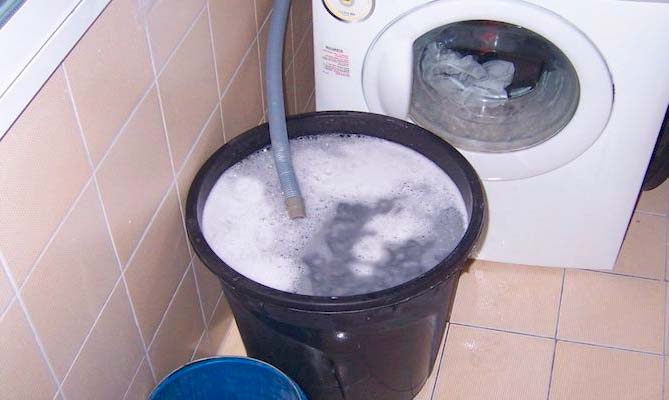 In addition to the electricity consumption, the washing machine also uses water. Think about it, nowadays washing machines use between 40 and 80 liters of water. With the constant growth of utilities, this is very important. Ask how much your assistant consumes.
Take for calculation an average of 60 liters of water for 1 wash, wash 3 times a week, and accommodation or area. The following result is obtained: if you wash during the day, 166 rubles will come out for a month, and if at night - no more than 57 rubles.
Most likely, if you live not in the capital, but in the regions, then the cost of electricity you consume is much lower.
For comparison, let's see how much electricity is needed when other household appliances work: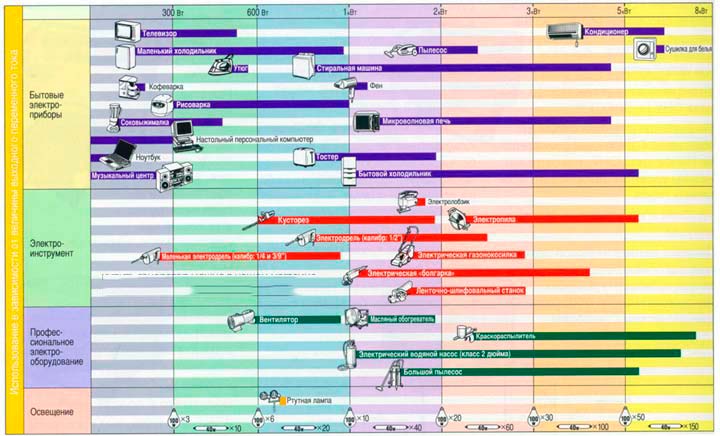
- The cooking surface consumes from 1 to 2 kilowatts per hour.
- A kitchen hood uses 0.12 to 0.24 kilowatts per hour.
- Water heater up to 150 l. consumes about 6 kW.
- Domestic air conditioner operates in the range of 0.4 - 0.24 kW.
- A microwave oven consumes 0.6 - 2 kW.
- Mixer - about 0.2 kW.
- Home vacuum cleaner - about 1 kilowatt per hour.
- The clothes dryer consumes 2-3 kW.
- A stationary computer consumes from 0.3 to 1 kW.
- Dishwasher - about 3 kW.
- A typical TV uses 0.15kW.
- The iron consumes 1 kW.
- Refrigerator total - 0.2 kW.
- The electric stove consumes in the range of 3-8kW.
- An electric grill will consume 1-3.6 kW.
- The toaster consumes 0.8-1.5 kW.
- Pressure cooker - from 1 to 2 kilowatts.
- Built-in oven - from 2 to 5 kW.
- The coffee machine uses from 0.5 to 1kW.
- Water heater (flow-through) - approximately 3.5 kW.
- The freezer consumes 0.2 kW.