 The use of modern household appliances in our homes significantly improves the quality of life.
It is almost impossible to imagine our existence without a washing machine. It has become such an integral part of our lives that it has become an integral part of it.
Perhaps this is the most popular technique that can: minimize manual labor, perform many operations, integrate into the home control system, have a beautiful, designer look.
The stage of preparation for the installation and connection of the washing machine
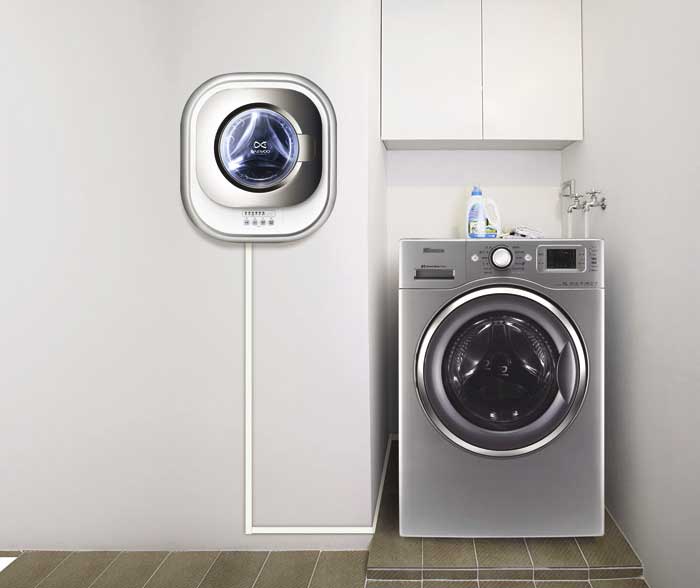 The owner of the future washing machine focuses primarily on personal preferences, specifications and financial capabilities. When this miracle technique appears in the house, the first question that puzzles its owner is: what does it mean to connect the washing machine on its own and how to do it?
Before purchasing a washing machine and bringing it into the house, it is advisable to already decide on the place of its installation. There are many models of different depths and sizes.
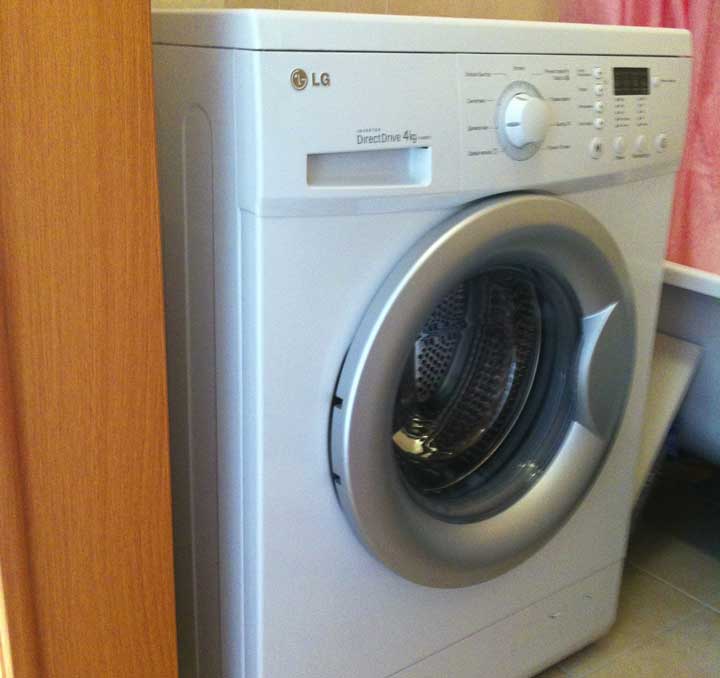
Although, in principle, if you are not going to build a washing machine into a bedside table or into a separately designed and allocated space, you can think about the installation site after the assistant is delivered home.The washing machine is standardly located in the bathroom, in the kitchen, in the hallway or in the pantry.
What requirements must be taken into account in this case?
- Flat floor.
- Proximity to water supply, sewerage and electrical outlets.
- Convenient operation.
- Aesthetics.
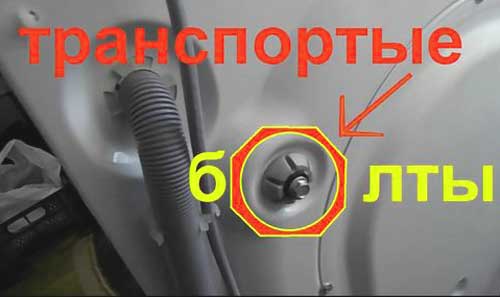 Next, the transport parts are dismantled: bolts, bars, brackets. The tank is fixed with bolts, which, when they are unscrewed, should hang on the springs.
This is a mandatory point, otherwise the operation, if present, will cause a malfunction of the equipment. Empty holes from the bolts are closed with plugs, usually included in the kit.
The brackets secure the power cord and water drain hose. The bars are placed between the tank and the hull.
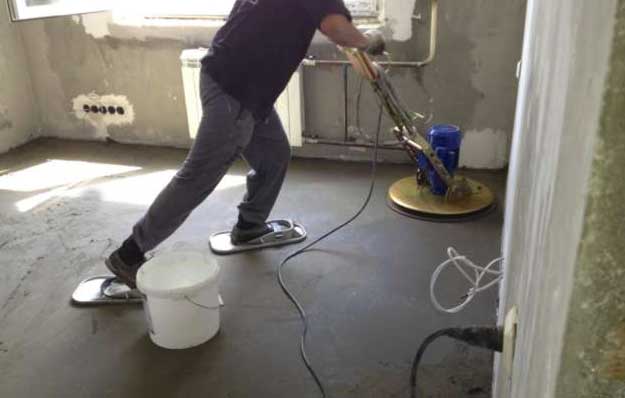 The next step at this stage is the preparation of the flooring for the washing machine. It must be strong, of course horizontal and resistant to harsh operating conditions.
If the characteristics of the living space do not meet the requirements, it will be necessary to take measures to ensure them. That is, you may need to lay a cement-sand screed on the floor or use other methods to strengthen the base of the floor.
Washing machine installation
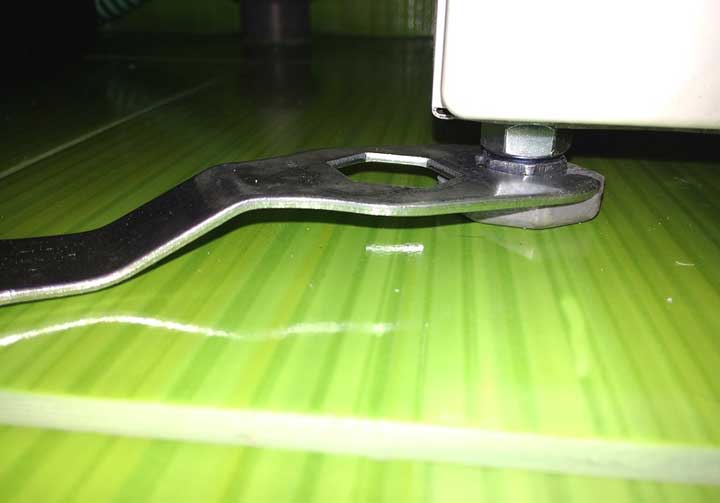 After the preparatory stage and unpacking the washing machine, it can be installed. You will need a building level or plumb line to set the washing machine strictly horizontally with a permissible deviation angle of 2 degrees.
Checking is carried out on the top cover.The angle of inclination is adjusted by screwing in the support legs of the washing machine or vice versa by unscrewing it.
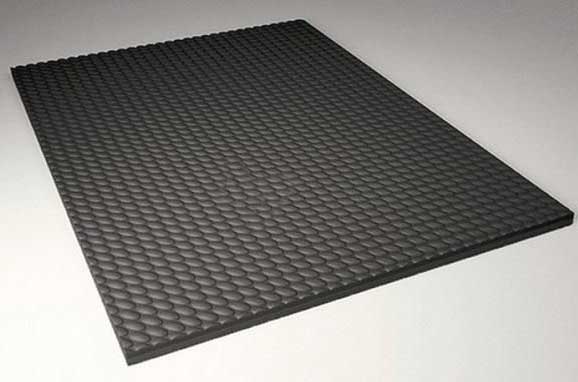 It is forbidden to put foreign objects under the washing machine, as they are likely to jump out during vibration. If the equipment is installed on a tile or other slippery surface, it is advisable to purchase a rubber mat - an excellent shock absorber.
After adjusting the legs, they should be fixed with a lock nut, which is twisted counterclockwise.
What else do you need to know before connecting washing machines?
- The most stable position of the washing machine is ensured when the legs are fully screwed in. However, this is only possible with a perfectly flat surface.
- Verify sustainability of technology can be done by swinging it diagonally. If it swings, it means that it is either set incorrectly or, if the body rigidity does not allow it, the swing amplitude for different diagonals should be the same.
- If installation on a flat surface is not possible, and an option with an inclined floor is being considered, then fasteners will be needed for fixing.
Connecting the washing machine to the water supply
 Some also use hot water in order to save electricity, but the issue is moot, since hot water has to be wasted.
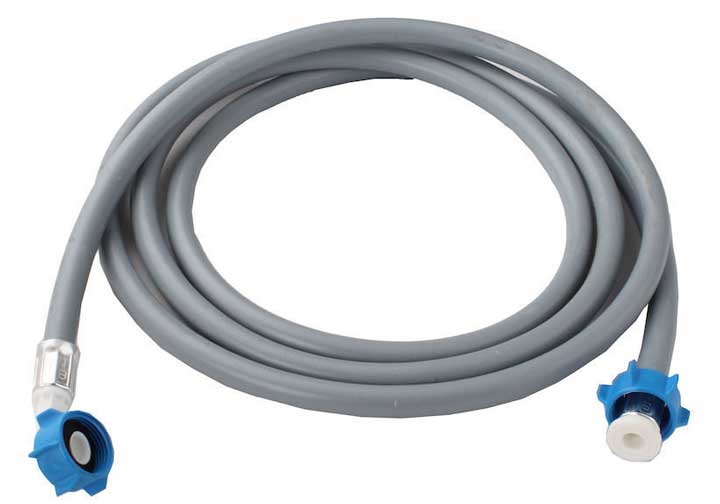
To connect the water to the washing machine, you will need a water hose. It usually comes with a washing machine.The hose for connecting the washing machine is equipped with fittings, but there is one caveat, which is that the length of a standard hose (70-80 cm) is usually not enough.
In this regard, you can buy a rubber hose of the required length in a store or use a fixed connection.
In the first option, everything is simple - the washing machine is connected to the equipment inlet pipe and the water intake point.
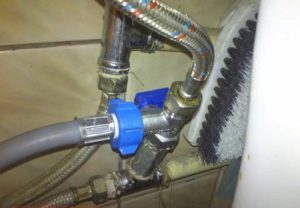
There are some points for this:
- the water hose must pass in a place inaccessible to mechanical damage, it is better if it is hidden;
- the hose must lie freely, and not stretch, otherwise it may be deformed;
- The quality of the rubber hose affects the reliability of use, as well as the tightness during operation of the washing machine.
If we consider the second case of connecting a washing machine, then water is carried to the washing machine using fixed communications. Here you will need pipes (metal) and plastic systems.
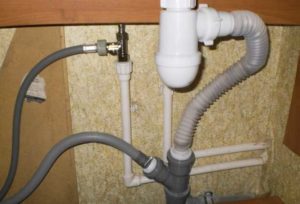
The use of steel pipes is impractical and impractical, since frequent rust blockages of the pipe itself and the parts of the unit will quickly disable the washing machine.
When using, nevertheless, metal pipes, it is necessary to take into account the fact that the direct connection of the washing machine will not ensure high tightness, so the use of an adapter hose can be considered a necessity in order to avoid leakage.
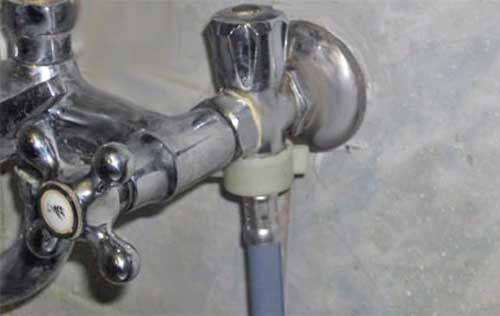 There is a way to connect the washing machine through the mixer. This will require a long hose. The inconvenience lies in the fact that before each wash you need to unscrew the tap and replace it with a water inlet hose. This option is rather temporary.
There are models of washing machines that are equipped with an AQUA stop.The meaning of the work is that drain hosehaving solenoid valves at the end that shut off the water when the washing machine is turned off.
The main points, without knowing which the connection of the washing machine to the water supply will be of poor quality:
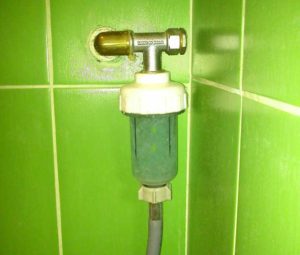 Water supply points must be equipped with ready-made outlets towards the mixer or flush barrel. Pipelines are connected through tees or individual branch pipes and spurs.
- Use a ball valve that can turn off the user at the right time.
- Try to solve the problem with the filter system. It is possible to use mechanical or magnetic systems that purify water, which will significantly extend the life of the equipment.
Sewer connection
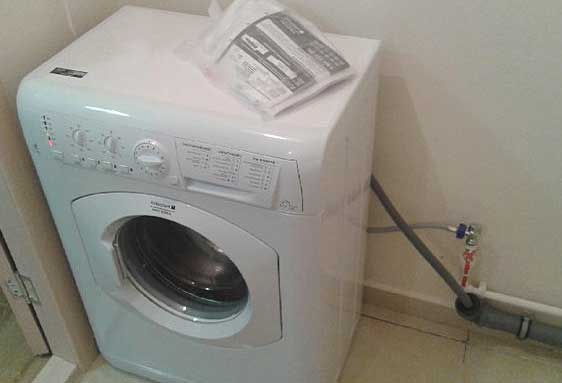
Connecting the drain of the washing machine to the sewer does not seem to be such a complicated process. Two ways are possible:
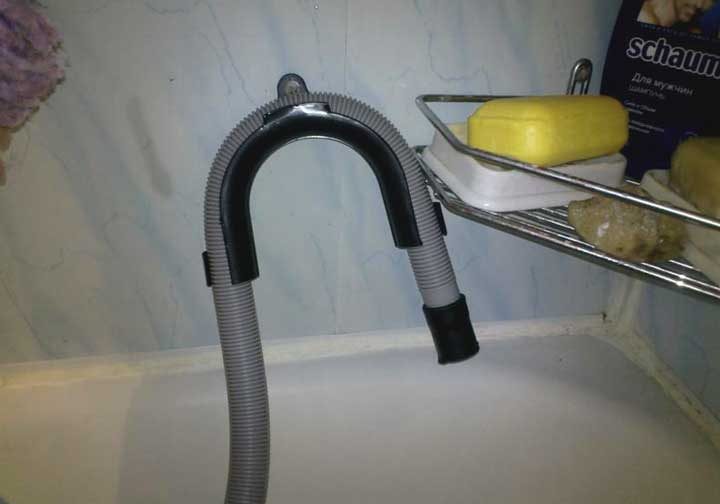
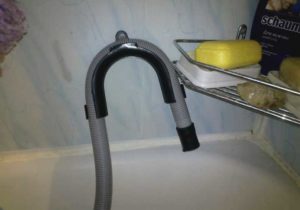 When the drain hose is fixed to the tub, for example. The hose is simply screwed to the nozzle of the washing machine, and the other end is lowered into the bath. To avoid flooding the room, the hose is securely attached to the back of the washing machine no higher than 80 cm. Keep in mind that corrugated hoses are prone to rapid clogging, so the minimum bending radius should be 50 cm, and the maximum radius should be 85 cm. For this, clamps are used that monitor and control the correct hose position.
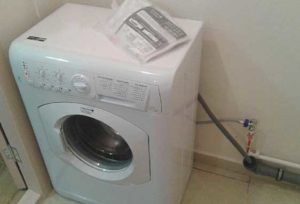 Connecting the drain of the washing machine directly to the sewer. More difficult option. Please note that the drain hose must not be too long, otherwise this will cause an increased load on the pump and may damage it. To prevent penetration into the washing machine smell and sewage from the sewer, siphons are used that do not allow this.Or the drain hose is fixed in such a way that an air lock forms in it, taking into account the minimum distance from the floor to the kink of 0.5 meters.
Connecting the washing machine to the mains
The washing machine is in constant contact with water, which requires the following points to be observed:
 It is recommended to lay individual power cables for the washing machine from the switchboard. Plastic boxes will help maintain the integrity of the interior.
- Ensuring electrical protection with the help of special devices - switches, residual current device. It will turn off the voltage if there is contact between a person and a wire. Such a device will protect the washing machine from mechanical stress, dampness and insulation problems. It is usually selected one step higher in current than the rating of the unit. The leakage current is also taken into account. If the washing machine is connected to an individual line, then this figure is 10 mA.
- The use of a cable with three cores and a cross section of at least 1.5 sq. mm.
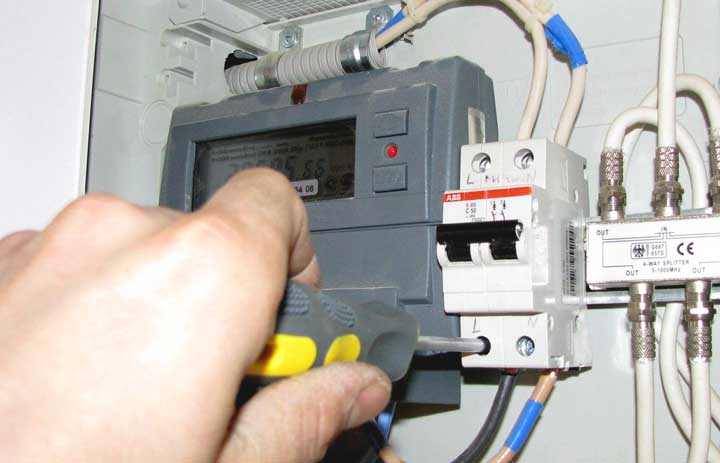
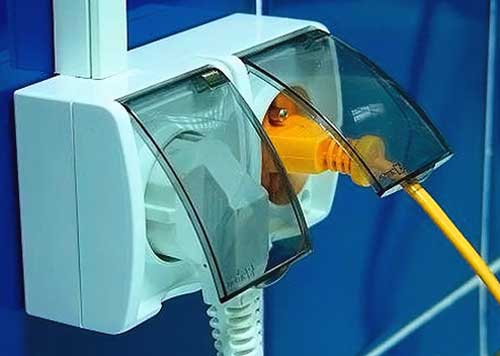 Sockets must be grounded, while the wire goes into the shield to the ground bus with a cross section of 3 mm. It is forbidden to connect this conductor to the water and heat supply system in order to exclude the possibility of equipment breakdown.
When installing the outlet, consider that a humid environment is not desirable and that adjacent rooms may need to be used. You should also pay attention to the degree of electrical safety of sockets, it is advisable to purchase with a ceramic base and with a protective cover.
Be sure to take into account what voltage it is designed for. It is not recommended to connect the washing machine through an adapter due to the heating of the contacts and the failure of the unit.
Health check
After preparation, installation and connection, a trial run of the equipment is carried out. This provides access to water and electricity.
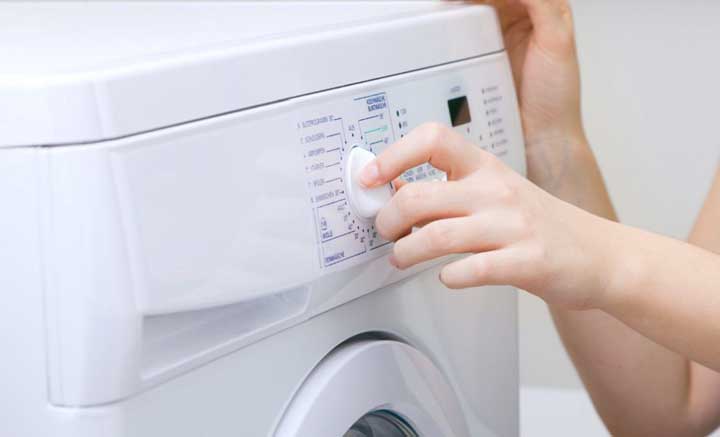 Checked tightness and other possible defects.
After that, the first wash without laundry starts on the program with the maximum water temperature.
This is done to remove the factory grease.
After a successful test, the washing machine can be considered ready for use.