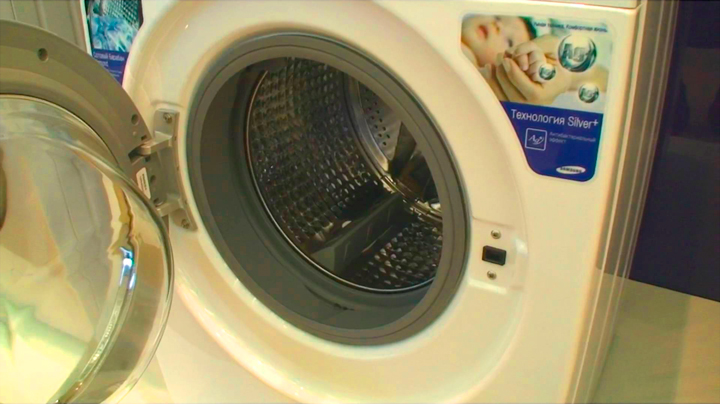
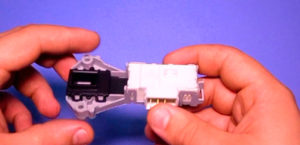
 The lock of the washing machine is not the most complex device, but washing is impossible without it. It is needed to block and seal the hatch during washing, rinsing and spinning clothes.
This device is designed to provide reliable automatic protection against involuntary opening of the door and, in the event of a breakdown, stops the washing program. The door lock device in case of malfunction and wear requires repair or replacement of the lock on the washing machine.
How the lock of the washing machine works and how it works
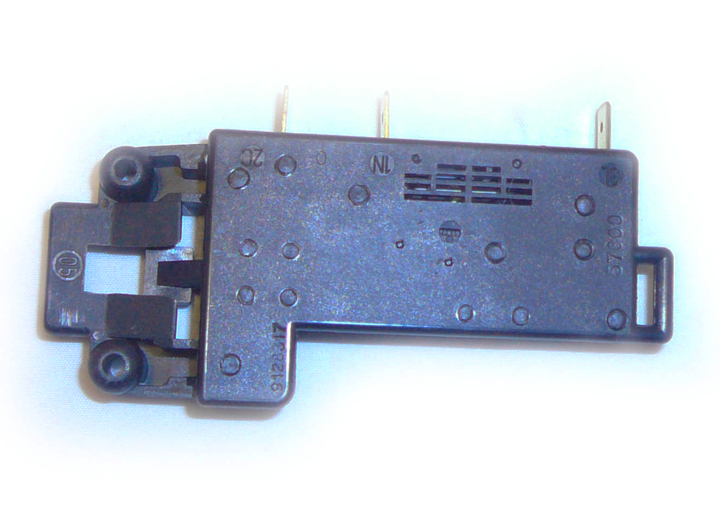 Washing machines from different manufacturers are equipped with one of two types of closing devices to block the sunroof:
- Electromagnetic. They cannot boast of reliability and efficiency.
- With bimetal elements.
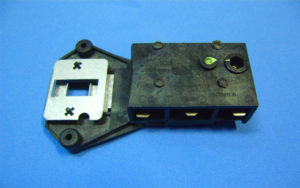 On modern washing machines are often found. More popular. The principle of operation of such a lock is based on the close cooperation of three elements:
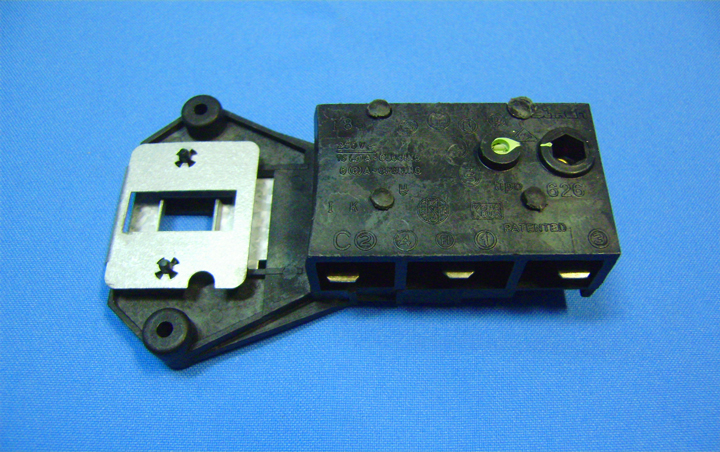
- fixative;
- thermoelement;
- bimetallic plate.
Upon receipt of a command from the control module of the equipment, the device for blocking the hatch of the washing machine receives a current charge on the thermocouple. The thermoelement heats up instantly, which leads to heating of the bimetallic plate, which becomes even longer and expands from this.In this state, she presses the latch and it immediately reacts and the lock of the washing machine is blocked. Until the plate cools down, Door will be blocked.
When the power is turned off, the thermocouple does not receive heat and the plate cools down, which causes the door to unlock. If the locking device or the triac responsible for its operation in the control module breaks down, with a constant supply of voltage to the lock, it will not be able to open until the washing machine is de-energized. If the contact of the heating element is broken or breaks through, then heating will not occur at all and then the hatch will not be able to close.
How to check the lock of a washing machine
To determine the performance of the washing machine lock device, you will need a tester - a multimeter. Before checking, the lock is removed. For this: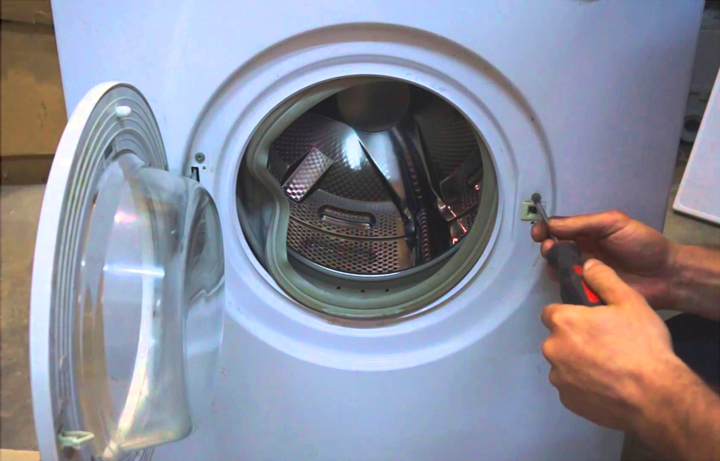
- open the hatch in the washing machine;
- find a wire ring;
- remove the ring with a screwdriver;
- adjust cuff so that you can get the castle;
- unscrew the bolts that attached the lock and pull it out.
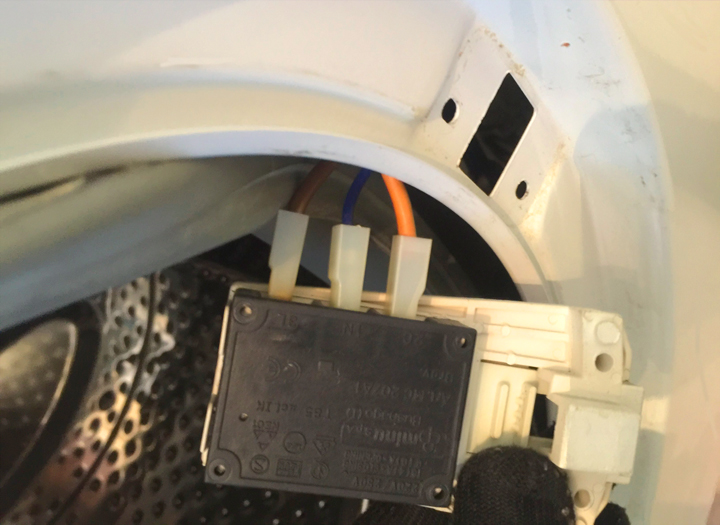 It is necessary to find out where the phase is, where is the neutral, and where is the common contact.
A device with a bimetallic plate is produced by many companies and the arrangement of contacts is often different. Without studying the circuit, it is very difficult to use a multimeter and check it.
We will assume that we have dealt with the contacts. Let's start checking.
- T
 the toggle switch of the device switches to the test mode.
 - One probe is attached to the neutral contact, the other to the phase contact.
- If the tester showed a three-digit figure, then everything is fine.
- Now the probes are installed on the neutral and common contacts.
- If the device is 0 or 1, the blocker is clearly defective.
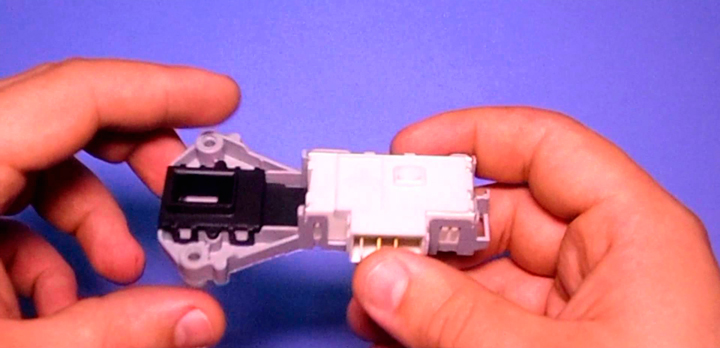
In the event that the check did not find a breakdown, but there is clearly a problem, then perhaps the reason is not in the electrician, but in the mechanics.
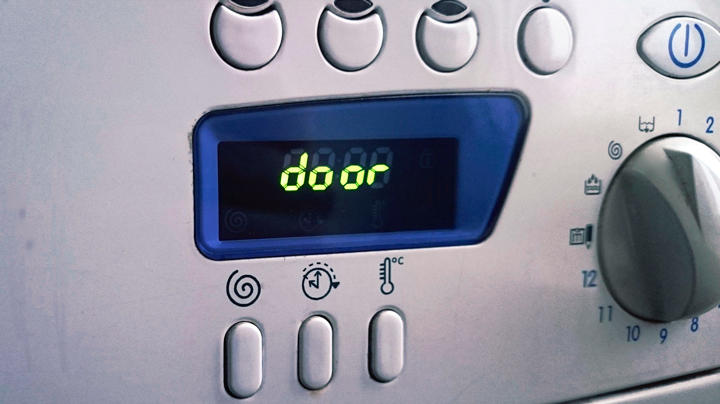 If the problem is mechanical, then the washing machine door may remain locked for many hours after a blackout. When the display shows error code problems with the hatch blocking device during washing, the problem is obvious. Also, if the washing machine does not want to block the hatch, either the lock itself or the control module has broken. You can find this out with a multimeter or by replacing the device with a new one.