 In modern automatic washing designs, checking the pump is not a difficult task, but not everyone does it correctly. There were times when the owners changed the working drain pumps, while spending a lot of time and money, and still the problem did not go away, which hinted at a breakdown of a completely different element of the washing machine.
We will tell you how to properly check the pump in the washing machine, which will help you protect yourself and your assistant from a huge number of various breakdowns, and learn how to find and repair breakdowns of this nature.
What do we need to test the pump?
Let's talk more about the signs:
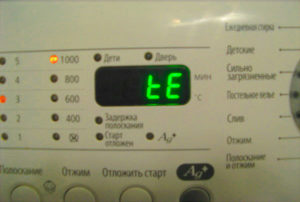 The first sign is error code - it appears due to the results of the self-diagnosis system - almost all modern automatic models are equipped with such a system. If the error code you deciphered leads you to a pump breakdown, then it is better to check first drain pump.
- Before starting the process of draining water from the drum, the washer stands still and is in the same position with all the water.
- In the washing design, the drain pump makes absolutely no sounds, or even signs of life.
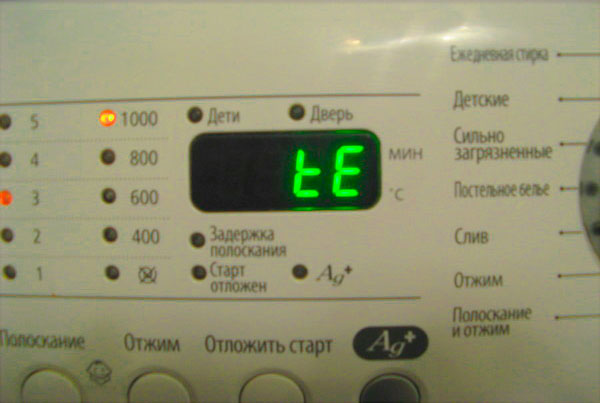
If you have already found out for sure or just suspect about a possible problem with the pump, then you should not postpone the repair for later, but it is better to immediately look for the tools necessary for this repair.
We don’t really need large equipment, like a plumber, we only need a couple tools, which, in principle, is not difficult to find:
- Screwdrivers (flat and Phillips);
- Multimeter;
- Pliers;
- Awl (or a needle in extreme cases).
If you do not have a multimeter, then we recommend that you purchase it, because it will come in handy in the future not only for this problem, but in general. This is quite a necessary device in the household for each of us. So, we take a working multimeter and go to fix the problem.
Getting closer to the element
In a washing machine type design, there is an opportunity to consider a drain pump, while not disassembling the case.
This feature is available in many models. In order to get to the drain pump, you must:
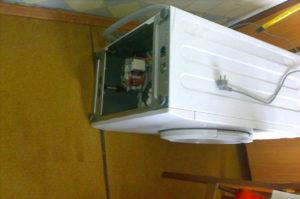 disconnect the washing machine from the power supply and all kinds of communications,
- pre-drain the water through the drain filter we need,
- withdraw detergent tray (powder or conditioners, etc.),
- put a floor rag (so to speak, to make sure in case there is water left in the washing machine)
- turn the structure over to the right side of the case.
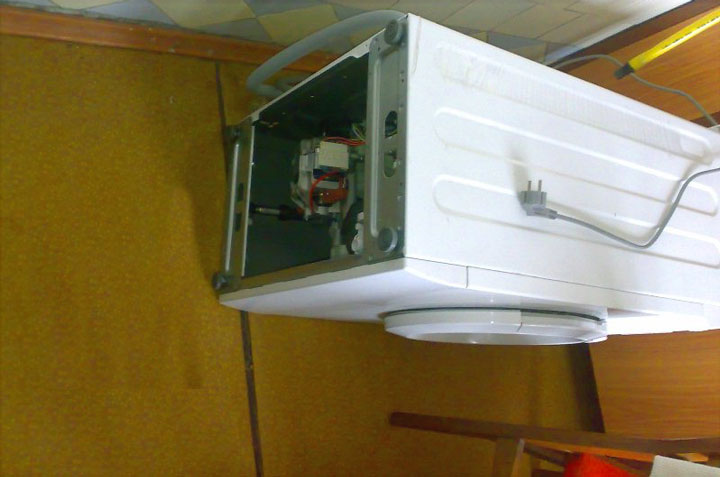
Basically, it's great. Good, because it is possible to get to the pump and even to the engine from below without disassembling the washing machine, but bad because the parts may be damaged during transportation or transfer of the washer, or the elements may become clogged and eventually break due to dust.
 In this case, you need to look through the bottom of the structure into the case, where you will have a view of the pump. The pump is located opposite the drain pump, or to be more precise, opposite its body. You already probably know what it is about, because you clean the pump in a timely manner, after unscrewing it. The pump is also very hard to miss.
There is a possibility that it is your model of the washing machine that closes the bottom with a special lid. But there shouldn’t be any difficulties with this either, you put the washing unit on the right side in the same order, take a screwdriver (Phillips) and get rid of the screws that overexpose the cover. Once you have everything unscrewed, just pry the cover (you can use a flat screwdriver) and remove it, and you will have access to the “inner world” of your washing machine.
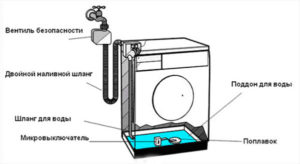
Everything will be a little more complicated if your washing structure is equipped with leakage protection.: in this case, there will be a tray with a special sensor below, it must also be removed. In order to achieve the goal, and finally, consider the washing machine drain pump in such a situation, we need to act in accordance with all eight stages of this algorithm:
 It is necessary to disconnect the washing machine from the power supply, disconnect it from the sewerage and water;
- Drain all remaining water through the drain filter, or through the emergency water drain hose;
- Pull out the washing machine to the middle of the free space, after laying dry rags on the floor (for insurance);
- We take out the tray for detergents;
- We turn the structure over to the right side of the case;
- We hook and pull off the pallet (you need to pull off 4 latches, a screwdriver (flat) is perfect for this);
- We move the pallet a little - this is done in order to disconnect the wire that goes to the sensor fixed on the pallet body;
- We debug the pallet away, and we can already freely delve into the elements of the washing machine through the bottom.
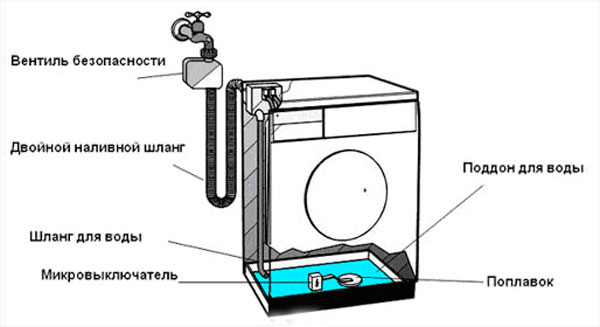
The sensor, which is installed on the pallet, is responsible for leaks. For example, during the washing process, water somehow enters the tray, the sensor notices this and shuts off the water, while stopping the washing process. This is done to eliminate such a problem as "flooding".
Checking the mechanical and electrical parts
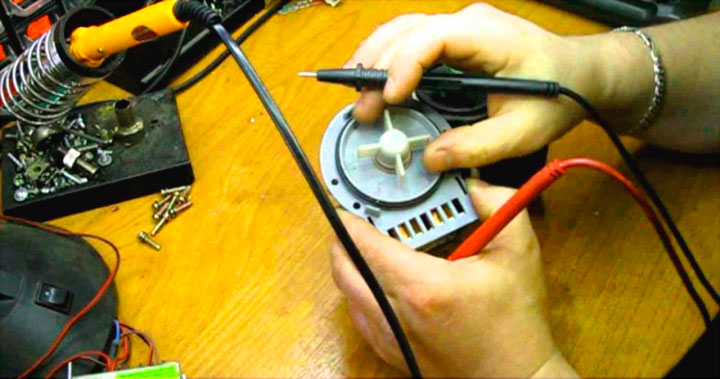
As soon as you find the drain pump through the bottom of the washing structure, it must be checked immediately.
Basically, the owners, when repairing the unit with their own hands, make one of the most basic mistakes of beginners - they instantly try to check the drain pump with a multimeter, imagining that the matter is in the electrical part.
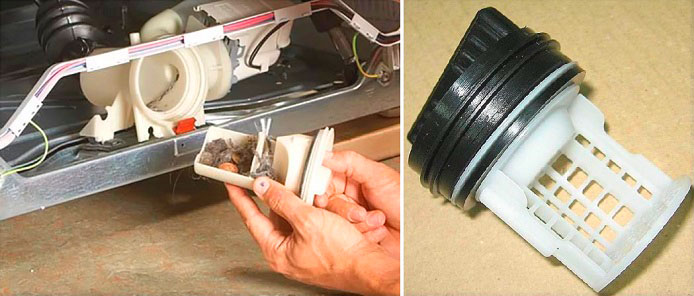 As we know, the drain system of the washing machine is designed so that almost all the garbage that gets into laundry bin accidentally ends up in the garbage filter. However, even the smallest piece of any debris that comes into contact with the impeller of the drain pump can give you a huge amount of problems. For example, the same hair: they are wound on this very impeller and thus can stop the pump. In this case, you must immediately make decisions and fix the problem.
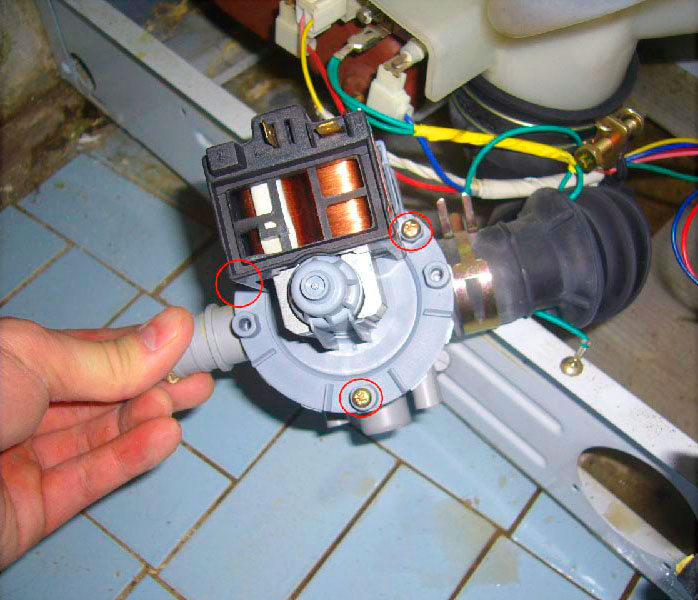
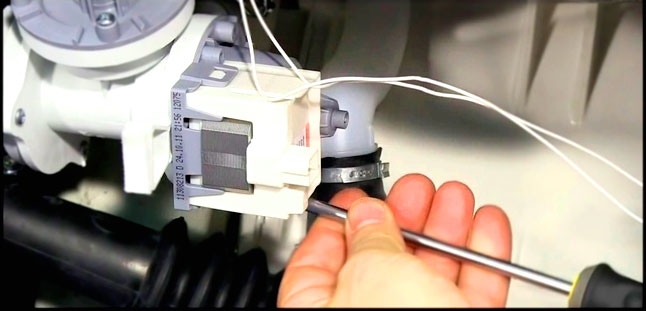
Pump repair, as well as its check, begins with the removal of this element. The pump is quite easy to remove, we will give the correct procedure:
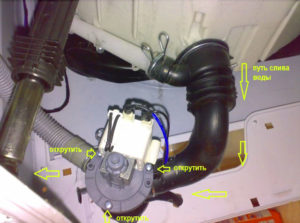 It is best to photograph the location of the wiring;
- You can then disconnect the wiring from the element;
- Unclench the clamps (use pliers) that hold the hose and pipe to the pump;
- Remove the pipe and hose;
- Grasp the pump body and turn it half a turn counterclockwise - this way you remove the pump.
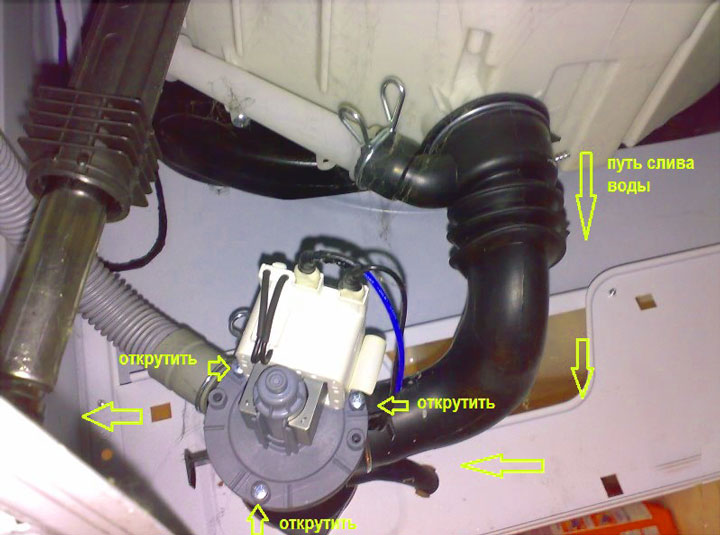
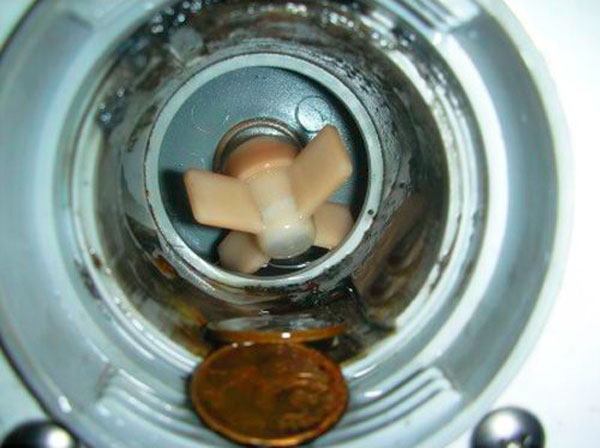 Next, you need to pry off the special latches that hold the pump housing, however, before this action, it is possible to check the impeller. You will immediately notice if something is wrong with the impeller, for example, the same wound hair. When you check the mechanical part of the pump, you need to check the mechanism itself, as well as the rubber gaskets, in addition, you need to clean all the parts of the pump and check for the presence of other remaining dirt. If there is one, clean everything again.
If you did everything right, checked the mechanical part of the pump, the pump, and still didn’t find anything, then you can start checking the electrical part.
First, set up a multimeter to check the voltage, then connect the device to the contacts of the drain pump. If on the screen of the multimeter you have a result of zero or one, then your motor has completely and irretrievably burned out, and it must be replaced. If the result is in three-digit form, then it is better for you to continue looking for a breakdown, since the motor is fully functional, and it is already becoming clear that the pump is not the issue. There is some probability that this is a triac of the control board, but we cannot say.
[warning Basically, there is nothing difficult in checking the drain pump and pump in an automatic type washing machine, especially if you enlisted help in the form of instructions from the masters in advance. [/ warning
To find, remove and check the pump and drain pump, the washing machine should not be disassembled to the screw, and checking all the elements will also take you a lot of time. We wish you good luck with your renovation!