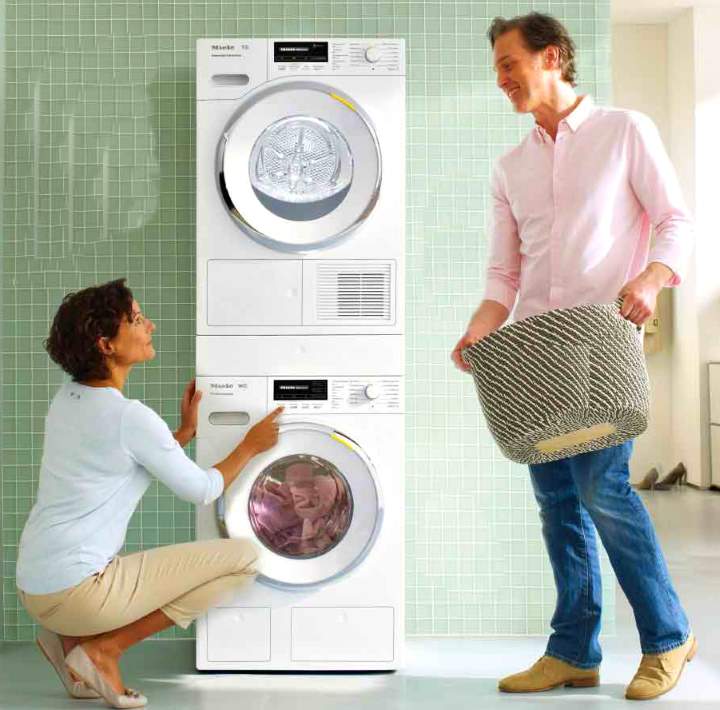
 In the modern world, technology plays a huge role in human life. It is difficult to imagine a hostess without a stove, vacuum cleaner or washing machine.
One of the most important helpers in everyday life is washing appliances.
And not just a technique that, before washing or squeezing clothes, makes unthinkable movements around the room, but smart automatic washing machines.
This article will discuss how to properly install a washing machine.
Before installation...
What will happen to the guarantee?
If this issue is resolved or not so important, then you can safely begin to act and first figure out how to install the washing machine yourself. This is not a difficult matter.
Preliminary check
After acquiring a washing machine and delivering it home, it would be nice to carry out some manipulations, or, in other words, check the equipment for defects.
For this you need:
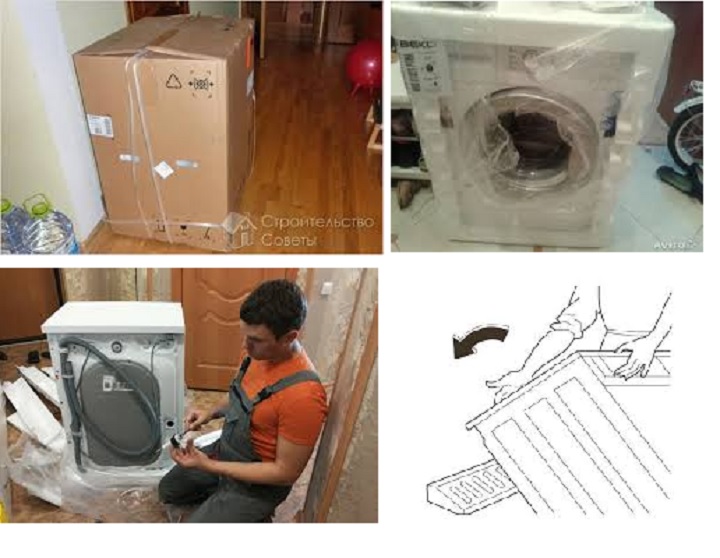 Unpack equipment.
Attention! It may happen that the washing machine does not fit or does not work at all, so the packing material must be stored for several days.- Check for damage.
Look for dents, scratches visible to the naked eye on the body of the washing machine; - Rock the washing machine from side to side.
With a characteristic tapping and incomprehensible noise, it is better to refuse such a product.
Read the instructions
So, an indispensable assistant in everyday life is acquired. But before it can begin to perform its function, it needs to be properly installed. It is advisable to carefully read the instructions that come with any equipment and study the nuances in order to avoid errors during installation.
Washing machine installation
Preparatory stage
Tools and materials
What is required for the correct installation of the washing machine:
- cold water, three-quarter inch threaded faucet;
- a tap for washing machines, with the help of which, the water supply is closed and opened;
- exit to the sewer. Usually this is a 32 mm pipe;
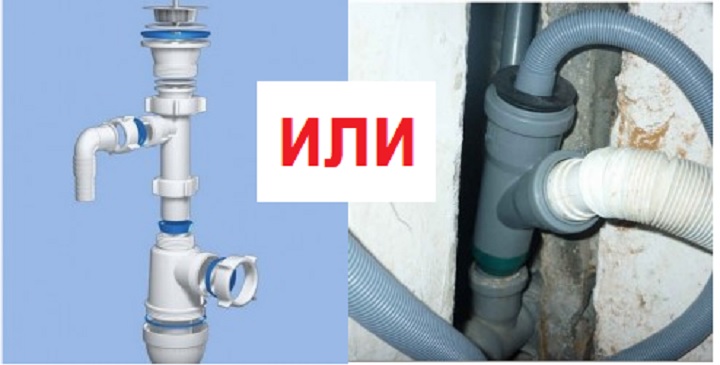 a valve installed on the sewer pipe so that water does not flow in the opposite direction. Usually this does not happen, since the floor is 80 cm or more higher than the sewer pipe;
- wrench;
- clamp for a strong connection of the hose and sewage;
- you need to install a 10-20 volt outlet for the washing machine in advance. It must have a cover that protects against accidental ingress of moisture and, as a result, electric shock.
The right place for the washing machine is half the success in its proper installation and operation.
Choose a place
It is at this stage that you need to decide where to install the washing machine.
It is placed on a hard horizontal surface.
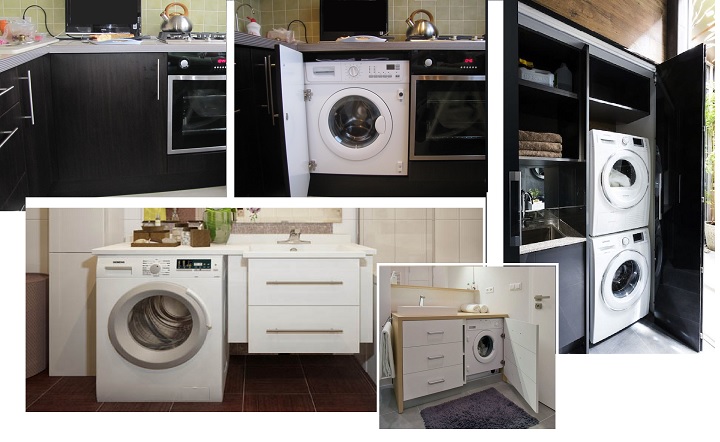
Make sure that the wire from the washing machine will reach the outlet and be free and not taut. For example, a good option is to install a washing machine under the countertop in the kitchen or, in the classic version, in the bathroom.
 Cooking washing machine
We decided on the place, now it's time to do the washing machine.
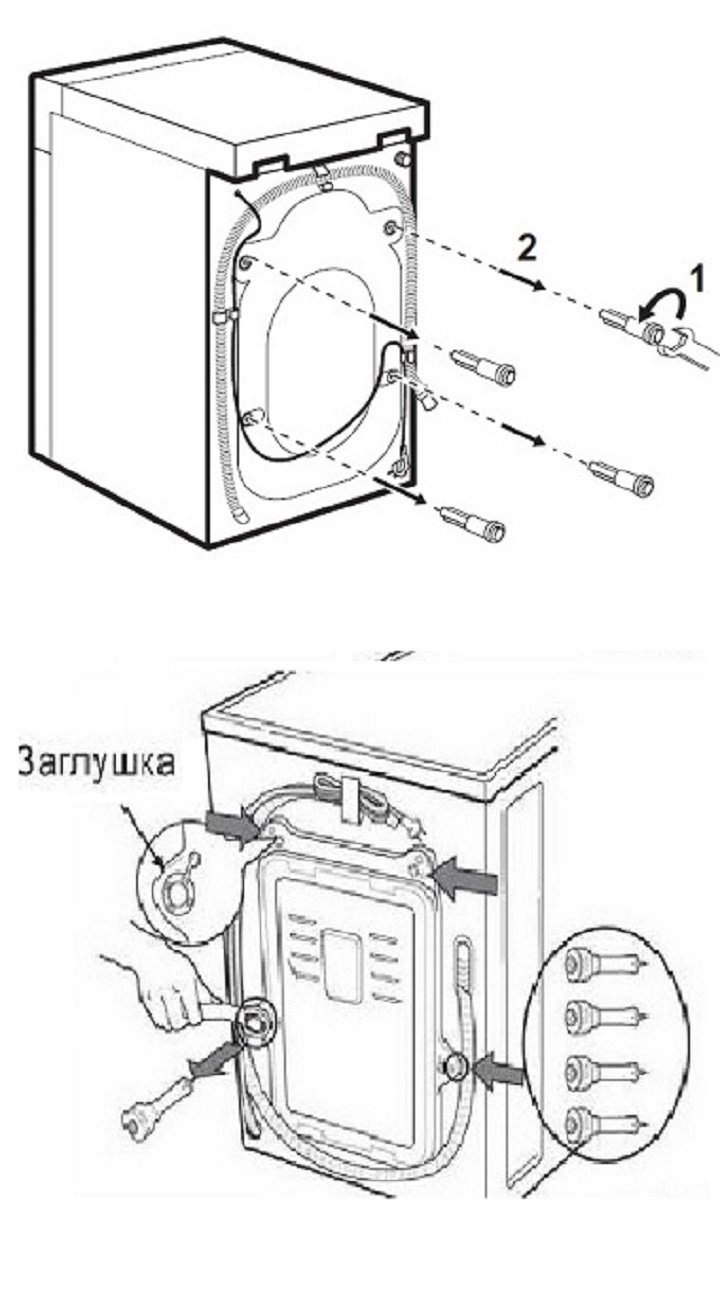
- Free the washing machine from excess film and other unnecessary items.
- Remove the shipping screws that secure the tank. This will help the wrench, matched to the diameter of the screws.
- To avoid damage to the drum of the washing machine, it is necessary to release it from all installed clamps required for transportation.
- Close all openings with plugs.
Installation phase
Setting up the stand
Thus, you provide it with maximum stability during washing. So what needs to be done:
- choose the height of the stand so that the washing machine does not shake during operation;
- install the equipment exactly horizontally relative to the floor.
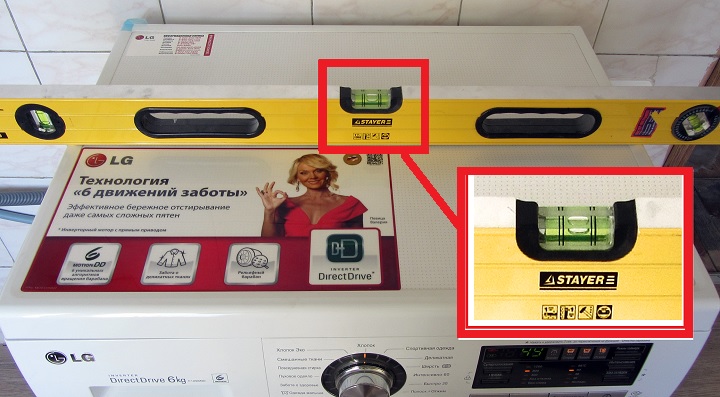
The fulfillment of these conditions guarantees the stability of the automatic washing machines and protects against excessive noise emitted by improper installation.
Even the slightest deviation will cause unnecessary vibrations. After selecting the height of each leg, they are tightened.
To prevent the washing machine from slipping on the floor, you can install rubber feet on the washing machine or lay a rubber mat.
We set up the power grid and grounding
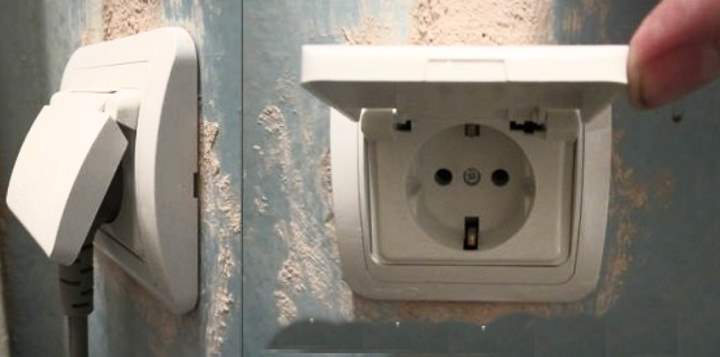 The cord, fixed on the back wall of the equipment, is connected to the network with grounding.
If there is no outlet at all, it is better to call the master who will install it with the correct grounding.
Otherwise, the washing machine will shock.
We connect to the sewerage and water supply
Let's figure out how to install a washing machine drain. All washing units are connected to cold water using an inlet hose.
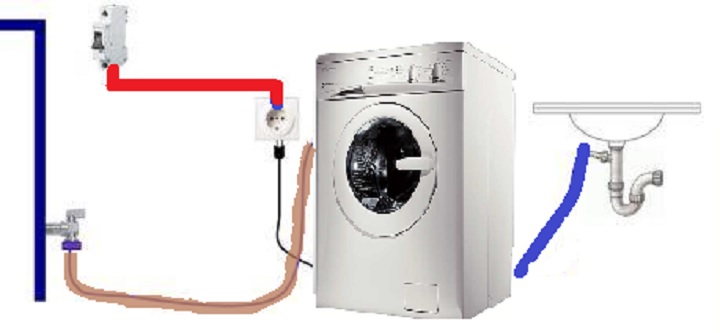
Further, the water is taken automatically by the drain hose to the sewer pipe, so the connections must be tight.
Using a plastic gateway on the back of the washing machine, a hose is connected.
In addition, it is necessary to install a shut-off valve, in case the equipment will not be used for a long time and for easy dismantling.
After that, the washing machine is turned on and checked for water leakage at the joints. If everything is normal, then the washing machine is ready to work.
The final stage
Performing a control check
Signs by which you can determine the correct installation of the washing machine:
 No leaks.
- Water is quickly drawn into the tank.
- The drum is spinning.
- Water heats up in 6-7 minutes.
- There are no strange sounds.
- Draining and spinning is of high quality.
If all this is present, then the washing machine is installed, right. And it will work for a very long time.


thanks for the info