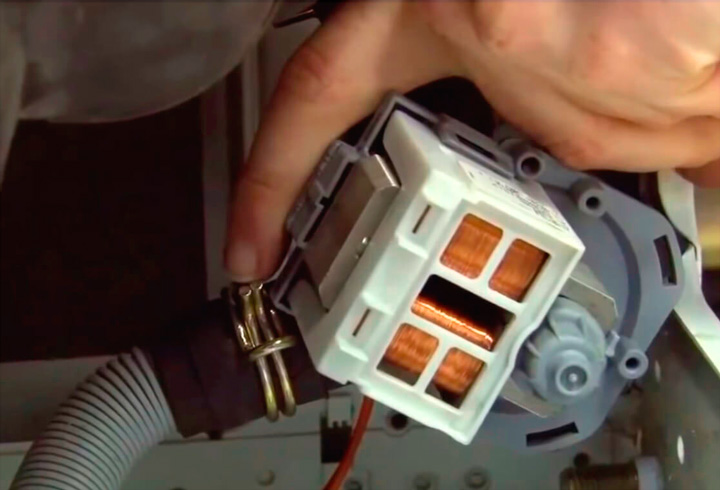
 The washing machine collects and drains water thanks to the most important element - the pump. With prolonged use, it can fail (physical wear), which is quite common, which is why the pump is considered the weak point of modern washing machines.
Signs of a broken washing machine pump
If there is a problem with the pump, machine can:
- do not respond to the installed program;
- publish buzzing sounds when collecting or draining water;
- pour water into the drum in a smaller amount than it should be;
- in the process of water collection, a complete shutdown of equipment is possible.
To diagnose and if necessary, repair the washing machine pump or replace it:
 listen to how the washing machine works to detect extraneous sounds. If the washing machine makes a lot of noise when draining, then there is water in the pump or some of its parts are deformed;
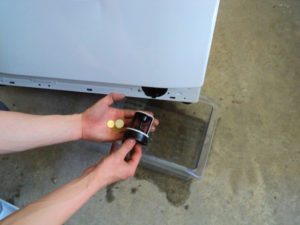
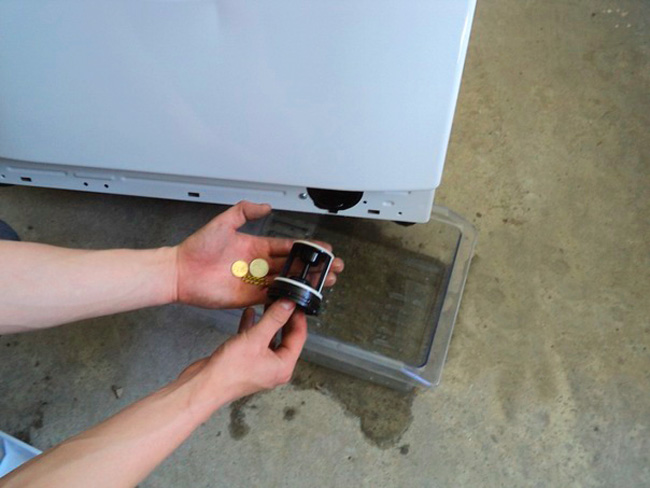
- open panel for removing blockage in drain filter. All small and foreign objects are here - hair, threads, buttons, seeds, etc.;
- clean drain hose. Even if it is not damaged in appearance, you still need to remove it and rinse it under the pressure of hot water;
 check the operation of the impeller, perhaps it is jammed. She is located behind drain filterto be unscrewed and pulled out. The impeller blades that need to be rotated will be visible. The rotation should not be too light. If there is any debris - knuckles from bras, coins, threads and hair, it must be removed;
- check the integrity of the contacts and the operability of the sensors going to the pump.
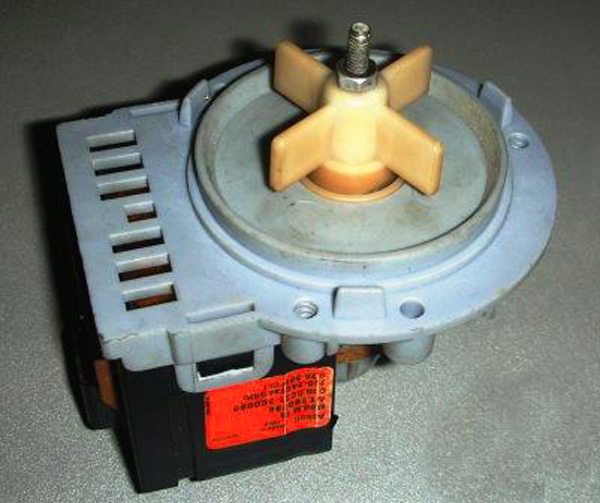
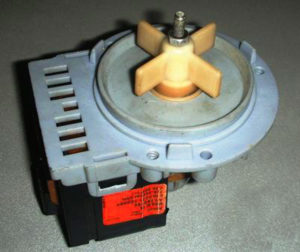
If during the diagnostic process the pump was determined to be the cause of the malfunction in the washing machine, then you will have to inspect it. To get to it, you need standard tools.
Causes of pump failure
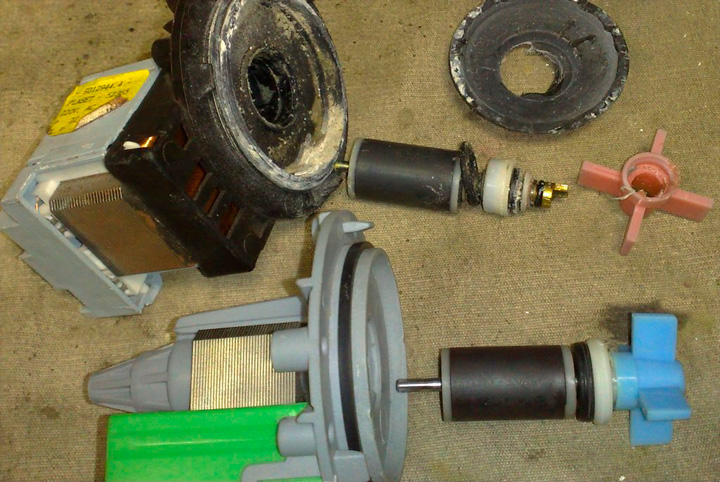
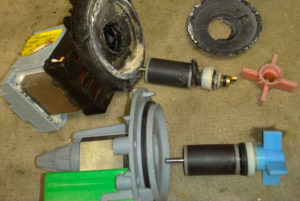 The pump broke down due to a malfunction of the engine, as a result of which there is no voltage to the pump.
- The seal (rubber or plastic) is damaged by scale and dirt that settles on the impeller.
- Incorrect connection of the pump or failure of the water level sensor cause the pump to work continuously.
- The pump will not be able to drain the water due to clogged filter.
- Small foreign objects destroy the impeller. It's easy to diagnose. When starting the pump, the washing machine makes a whooping sound.
Where is the pump
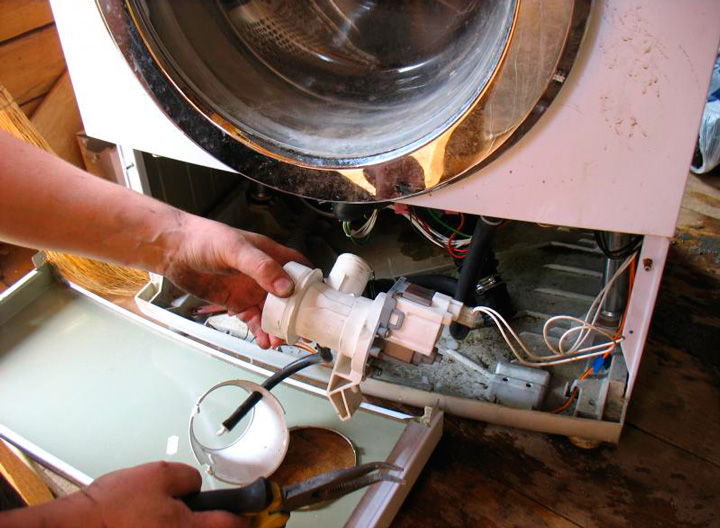 Washing machine models Candy, LG, Whirpool, Ariston, Beko, Samsung have a pump at the bottom. To get to it, the washing machine is laid on its side and the bottom panel is removed. The snail with the filter is attached with screws that are unscrewed and the desired part is in your hands.
If we talk about the Zanussi, Electrolux models, then the pump is located behind the back cover, which will need to be removed.
The most difficult models in terms of disassembly are Bosch, AEG, Siemens. They will have to dismantle the entire front panel.
Do-it-yourself washing machine pump repair
Under heavy loads, the pump is protected by fuses that are located on the winding of the part and turn off. When the temperature normalizes, the contacts are restored.
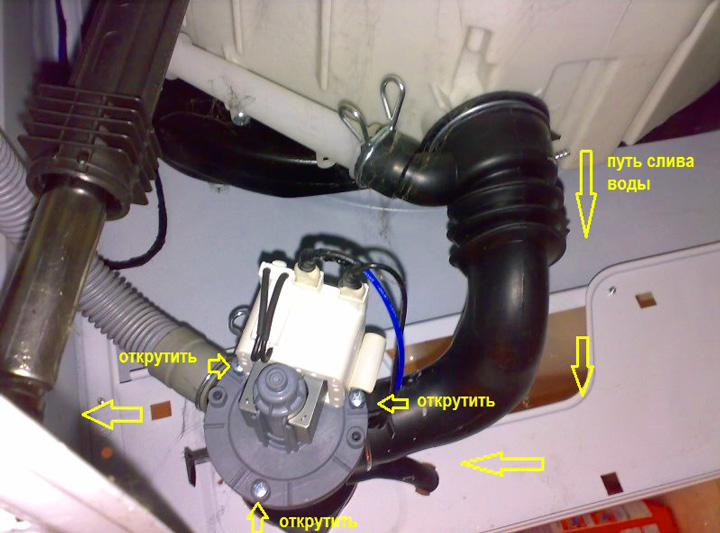 To get started you need disconnect the pump from the snail. In general, there are two types of fastening: simply with screws and screwless (you only need to turn the pump counterclockwise). At this stage, you can find out if the impeller is scrolling on the shaft. Normally, it should spin with small delays, the so-called jumps. This is due to the action of the magnet rotating in the coil. If it turns hard and there is no debris, then you will have to completely disassemble the part and see if it is possible to repair the pump impeller of the washing machine.
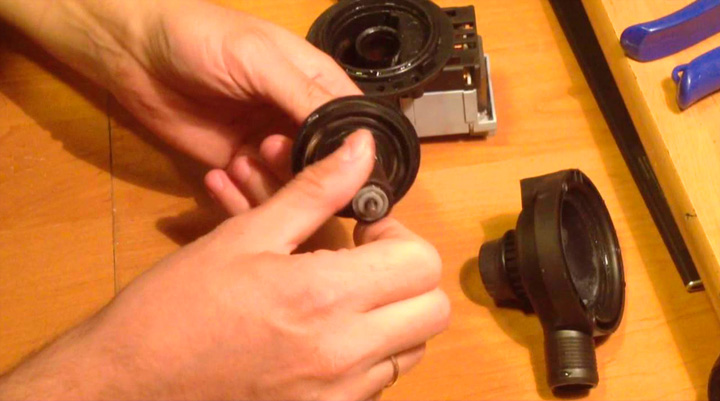 There is a latch on the motor housing. on both sides, which must be unhooked with a screwdriver. This is if your washing machine has a collapsible motor, but there are non-collapsible types. At first glance, it is impossible to make out, but if you know some of the nuances, then you can.
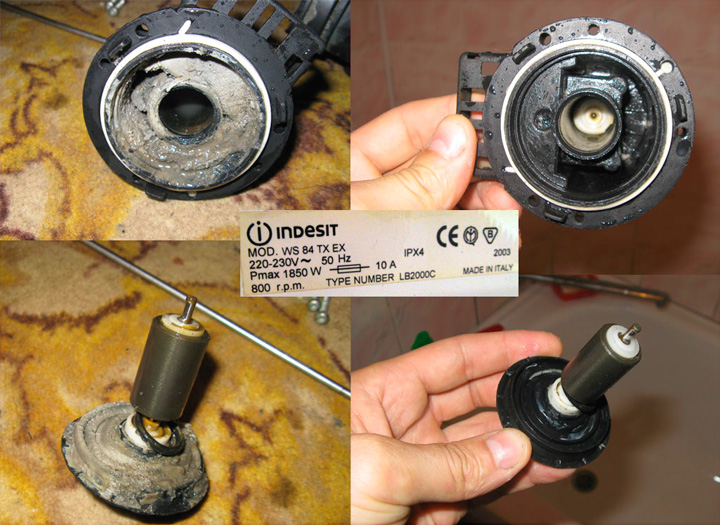 A building hair dryer will help, which needs to warm up the long part of the part, the so-called shank little temperature. After heating the shank, the cross with the magnet is removed from the body. Usually dirt accumulates on the magnet and in the place where it was pulled out. After cleaning, the magnet itself is removed.Next, the bearing will be visible, which is also cleaned and lubricated. After these procedures, the part is assembled back. Under the blades is a ring that should fit snugly into place. The seal may need to be replaced.
Bearing wear
Because of this, friction appears between the snail and the impeller, which causes malfunctions and repairs of washing equipment pumps. The problem can be solved by replacing bearings. In an emergency, when it is not possible to buy a new part, and washing cannot wait, only shortening the blade by no more than 2 mm will save. This is done with a sharp knife.
After repair, the body is installed in the coil and fixed. This ends the troubleshooting of the pump on its own.
How to prevent pump failure
If you follow these recommendations, you can significantly extend the life of the drain pump.
 Always remove foreign objects from pockets before washing.
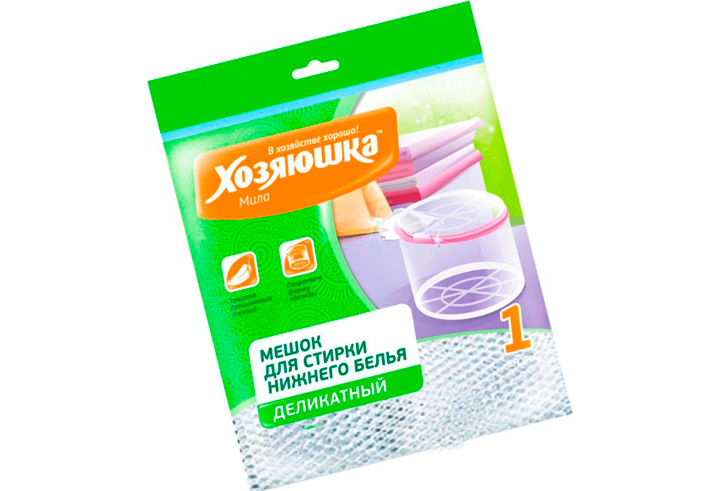
- Use laundry bags.
- In case of strong, rough dirt, clean things, and also manually get rid of animal hair before immersing in the washing machine.
- Install filters on the inlet pipe.
- Spend lime scale prevention.
- When washing things with buckles, studs, turn things inside out.