Why is there too much foam in your washing machine?
There are situations in life when you go into the bathroom and see that the washing machine is full of foam. “Why?”, “How did it happen?”, “What to do?” These are the first questions that come to your mind.
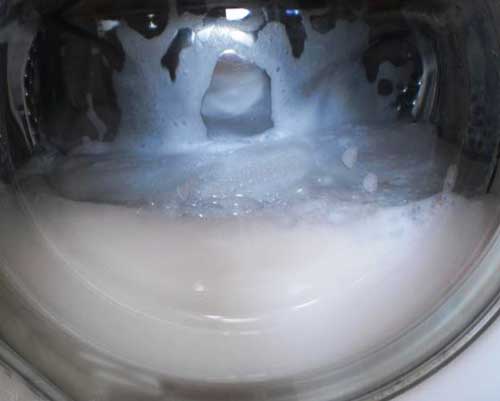
The first thing you should do is turn off the power to the washing machine. If a lot of foam has formed during the operation of the washing machine, then it can get into the electronic parts of the device and easily disable them. Therefore, we stop washing and drain the water through the hole at the bottom of the washing machine. Usually there is a hatch in the lower right corner, if you open it, excess water will pour out, but it is better to put a rag before opening so as not to make a flood in the bathroom.
Next, take out the clothes. We remove with our hands all the remaining foam in the drum and turn on the rinse. If there is a lot of foam, it may not all come out of the washing machine during the first rinse. Therefore, if the first time did not work out, put the rinse until there is no foam left in the washing machine at all.
After carrying out these simple operations, you should analyze the causes of excessive foam in the washing machine:
- Very often it is associated with powder.
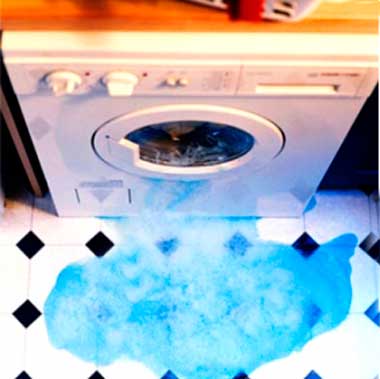
What to do if there is foam? - This can happen when using a cheap powder with a low content of defoamers or if you come across counterfeit.
- You may have added hand washing powder, which you cannot do, as it is not intended for this. Be sure to check!
- Very often, housewives pour in too much powder, thinking that this is the best way to wash very dirty laundry. This is mistake. Laundry detergent should be poured exactly as much as recommended by its manufacturer. If your washing machine is in good working order, it will cope with any dirt and with the recommended amount of powder.
- When washing light and voluminous items, a smaller amount of powder is required. Curtains, tulle, soft voluminous things themselves additionally whip up abundant foam in the washing machine. All this works on the principle of "sponge". Our advice - use special equipment strictly according to the instructions or pour less powder (the dose can be reduced by almost half).
- Too much foam is often caused by soft water. This usually happens either when moving to a new home, or when installing filter water softening. Foam is formed the less, the harder the water. The opposite is also true - soft water produces a lot of foam. If this is about you, then reduce the amount of powder poured by one third and everything will be in order.
What if everything is exactly the same for you as it was yesterday and a week ago? Why is this happening if nothing has changed: the same powder, its quantity, the same water and the same things?
With a high degree of probability, it can be argued that some kind of malfunction is the cause of the formation of abundant foam.
The most common reasons why your washing machine is covered in foam
The foam that climbs out of the washing machine during washing can signal many reasons: from a simple blockage to a leaky assembly. Therefore, it is better to entrust a specialist to identify the causes of a malfunction.
| Breakage symptoms | Probable Cause | Service price |
| Washing machine in foam, water around | Most often, the rubber gasket of the hatch does not hold. This happens due to poor-quality rubber, and improper operation. Often, the sealing gum is damaged by small objects that have fallen into its folds and are not pulled out of pockets. It happens that the seal is torn from a sharp closing of the hatch, despite the fact that water has accumulated in it - pinching and rupture occurs. The place where the foam comes from depends on the place of the rupture: if from the outside, then through the hatch, and if from the inside, then from below the washing machines. |
from 9$ |
| Around washing machines water with foam | Such a symptom suggests that the malfunction is most likely in the water drain system.
As a rule, in this case, the pipe is damaged or the fastening of the drain hose is loose. This requires an examination of the entire drain system: a pump, a drain hose, a pipe, a filter, as well as a place where the drain hose is connected to the sewer outlet. The goal is to determine the cause of the leak. Tighten wherever required, screw loose parts, and/or replace damaged ones. For example, a loose drain pipe clamp should be tightened, and in case of damage to the drain hose, only a complete replacement will help. |
By yourself or from $6 |
We think now you understand why a lot of foam sometimes forms during washing.And the ways to eliminate these defects are not very serious and, accordingly, not too expensive. Therefore, you should not postpone the repair "on the back burner", because a minor breakdown can lead to a more serious one and then you have to fork out a lot. Believe me, repair of the control board or motor is significantly more expensive! Often the cost of such repairs is comparable to the cost of ½ of a washing machine.