 The master's washing pump is jokingly called the "heart" of washing machines.
The main task of the pump is to pump clean water into the tank before the washing process, and then pump back the dirty water after washing.
Time will pass, for some it will take much longer, while for others it will be less, and the time will come to change the pump, because this element wears out, as it holds a large load.
In our article, we will tell you and explain how to properly check the pump, how to get to it, and most importantly, how to make repairs yourself.
Causes of failure of the drain pump
It may also be that the reason lies not in the pump. So, the following verification steps:
- The pump must be listened to;
- Open and clean the filter (if there is such a need);
- Verify drain hoseif there is contamination, then clean;
- Check the rotation of the impeller on the pump, maybe it slows down somewhere;
- Check the contacts and sensors that go to the pump.
 Some breakdowns can be identified by ear, for this you do not need to be a master. Just approach your assistant during the washing process and listen carefully.Take as a basis the moments of filling and draining water into the tank according to the program you set.
If your pump is running buzzing and it works, but water does not enter the tank, or not a single sound is heard from the pump - then we can say that the breakdown is localized.
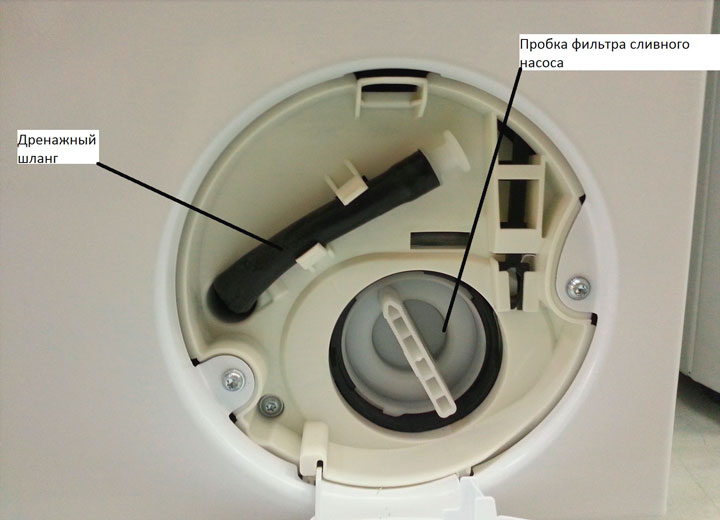 After checking, you need to determine whether to replace the pump with a new model, or whether it is possible to replace it yourself. To start remove the drain filter, and clean it from all sorts of weeds.
There is a possibility that the impeller on the pump is not spinning, or spinning slowly due to the fact that a coin got into it or bone bra. In this case, failure is not ruled out.
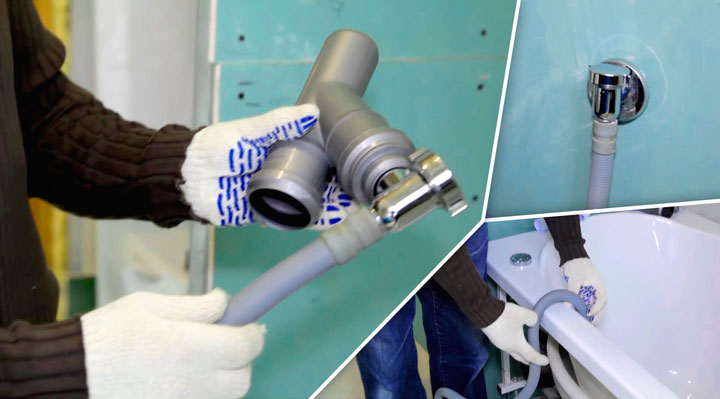 If you cleaned the filter, but it didn’t help you in any way, then you have to take on drain hose and check for dirt and him. After you have checked and cleaned the hose, put it back on and run a test wash. If your pump continues to make undefined sounds, then we should continue to troubleshoot.
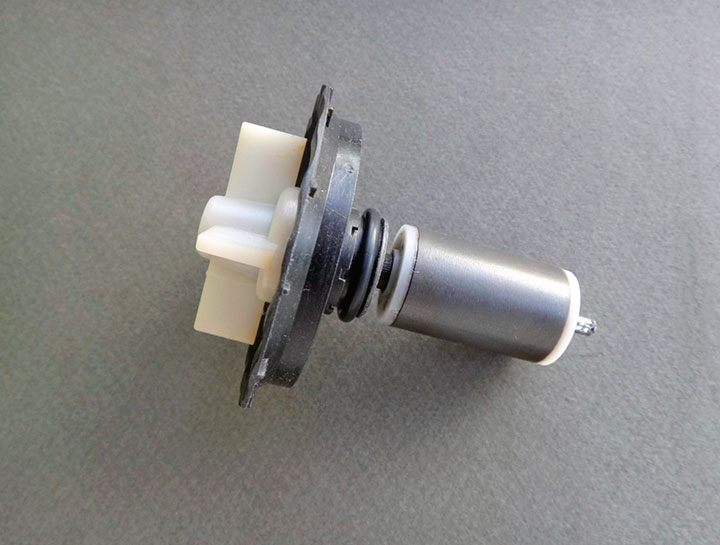 let's check the impeller of the drain pump, the way it spins. First you need to get to this impeller (it is possible to get to it without disassembling the washing machine), through the drain system filter, which can be unscrewed. For convenience, get a flashlight and shine it through the hole from which you got the cork.
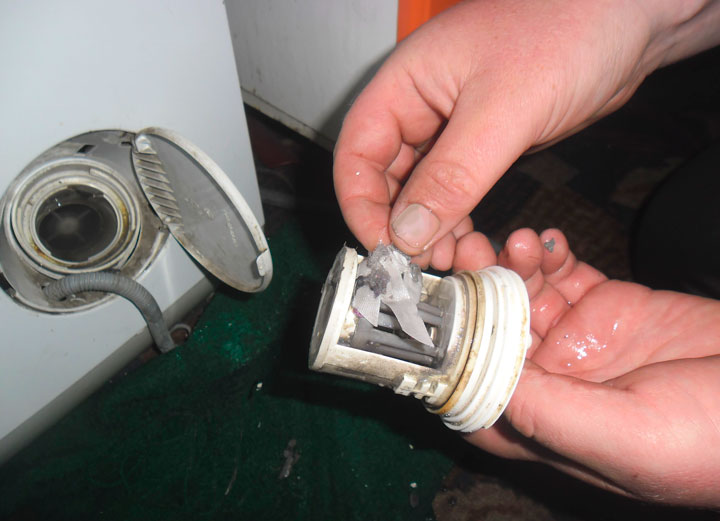 In this hole you just see the impeller of our capricious pump. You just need to put your hand in and twist the impeller, thereby checking it for performance. If the impeller slows down, then it is worth checking the inner casing (where the impeller is located) for the presence of various kinds of objects that can slow it down. Basically, it can be threads or pile and wire, etc.If your impeller rotates freely or you simply haven’t found something that can interfere with its torsion, then you will have to resort to disassembling the structure.
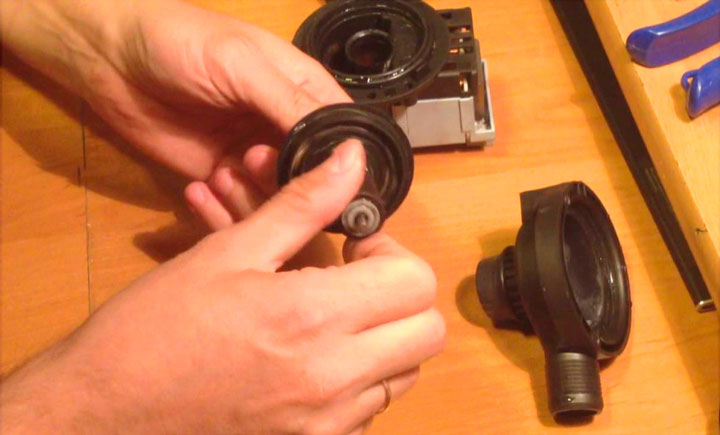 When you get to the pump, let's check the impeller again. If you want to check the drain pump, you can remove it and examine it up close.
If you did not find any foreign objects, and the impeller still slows down, then therefore, the reason lies in the mechanism itself and it will have to be disassembled to the screw.
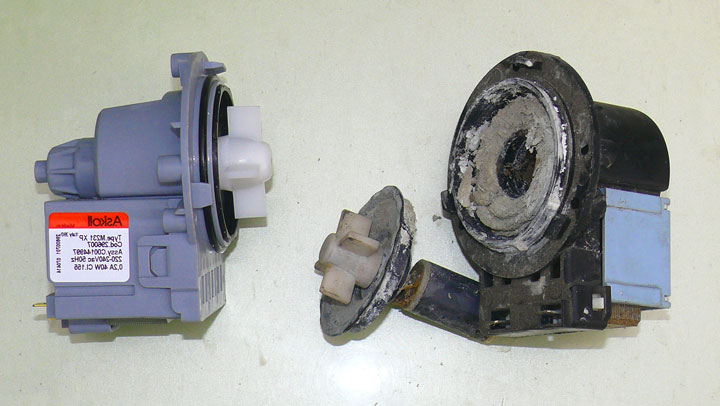 Perhaps your impeller is spinning normally, but occasionally slows down, if it's all about sensors or burnt contacts, there may also be a problem in the control unit.
If you have checked everything twice and found nothing, and the pump still does not want to work, then you should replace it.
Washing machine repair or replacement
Tools needed for repair
The composition of the tools you need will depend on the type of malfunction, so we will provide you with a list of all the tools you need, so to speak, to the maximum. The following list to help us deal with the pump:
- Drain pump assembly;
- New impeller;
- Pad;
- Axis;
- Pulley;
- Cuff;
- Drain pump sensor;
- Contacts.
It is better to do the same with other components. In order not to look for all the details in the corners of the mall, the easiest way would be to bring the disassembled pump and show what elements you are missing.
 If you want to order components on the Internet, then you better search by numbers. They can be viewed on an old removed pump.
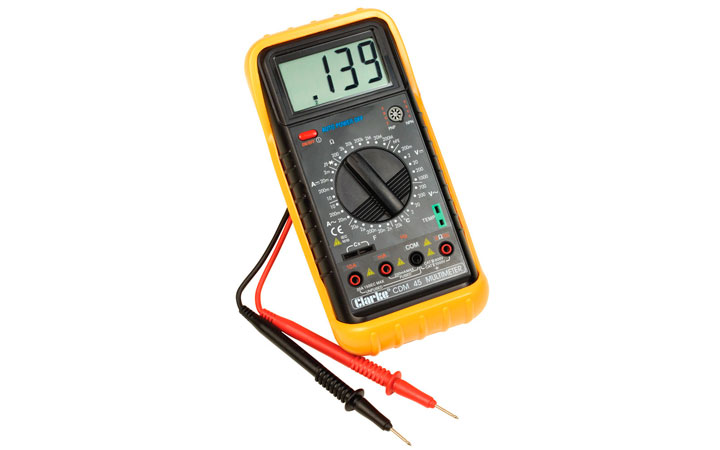
The tools shouldn't be a problem. In particular, apart from a screwdriver (Phillips) and a penknife, we do not need anything. But if you need to check the wiring, sensors and contacts for operability, then you will need to purchase multimeter.
How to get to the drain pump
Some pumps are fairly easy to get to, but others are not. Let's look at everything in order.
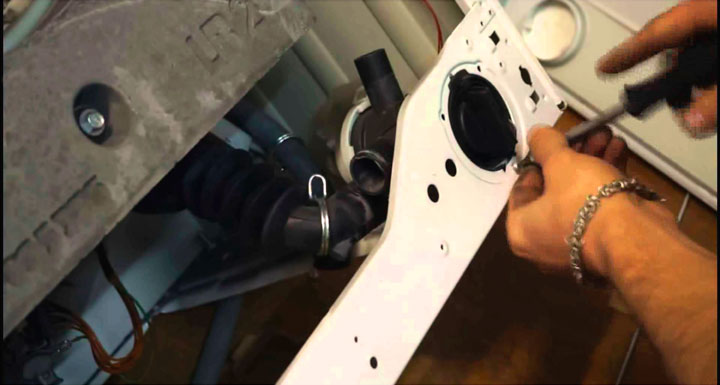
 Firms Samsung, Ariston, Candy, Ardo, LG, Whirpool, Beko and Indesit the easiest way to get to the pump. You just need to turn the washing machine on its side, dismantle the back panel and the pump is already in front of your eyes;
- Firms Electrolux and Zanussi produce rather complex models. To get to the pump in these models, you need to deploy the assistant and unscrew all the screws that hold the back panel.
- Firms AEG, Bosch and Siemens the most complex models, and it is very difficult to get close to the pumps and pumps. To do this, remove the front panel and control panel.
We fix everything on our own
As we said a little higher, the pump is a fairly simple device, and it is quite easy to repair it. If no external damage is found, then it should be disassembled and the internal elements examined close up.
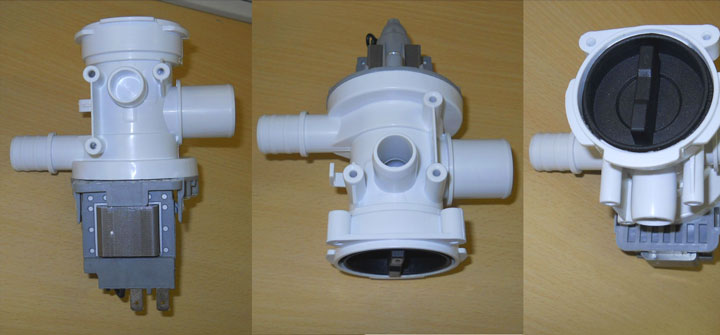 One of the most common pump failures is the impeller. The impeller itself may fly off its axis, but the pump will work and make characteristic sounds, but the water will still not pump. The solution to this problem is quite simple - just buy a new impeller and install in place of the old one.
Examine and check all moving parts of the pump and the pulley. If you also find a sign of working off, then everything is subject to notice.
 Pump parts are very cheap, however, do not neglect to replace them, or use branded spare parts, because by delaying the moment, you can simply lose all your time and end up replacing the pump completely.
When you are repairing an old pump, you should be aware that there is still water in it, so be prepared ahead of time and bring water containers and floor cloths.
So, as you already understood, pump repair can be done himself, while not calling the service centers and not calling the masters. In order to do this, you just need to study our article well. Good luck with the repair!