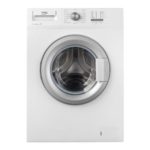
 Many people know that a washing machine uses a lot of electricity to heat water, so in an attempt to save money, one may wonder: how to connect a washing machine directly to hot water? How significant will the energy savings be and will it harm the washing machine? Let's figure it out.
Why is it important to read the manual? First of all, you should look into the instructions, if your washing machine is very old, then it is possible that it has two inlet hoses for cold and hot water, respectively,
... and for some modes, such washing machines took hot water, but still mixed it with cold water and heated it up as needed.
General information
But over time, they decided to abandon this idea, perhaps for the sake of economy and simplicity of the washing machines themselves. Therefore, now most washers are designed to be connected only to cold water, and when connected to hot water, you may encounter some problem areas.
Details
Possible problems when connecting the washing machine to hot water
Washing machines with a connection to cold water only are designed in such a way that they heat cold water to the desired temperature in accordance with the mode that you have chosen, and when hot water is poured into the tank at a temperature of around 60C, many washing machines perceive this as an emergency, they say some of the heating elements in the washing machine itself failed and overheated the water too much. Then the washing machine will simply stop working and will give an error.
The second, no less important problem is that hot water is considered technical water and therefore is not cleaned as thoroughly as cold water. It often contains impurities, and if your house is heated by a boiler room, then even caustic soda is often added to hot water to reduce scale from boilers in the boiler room. It is also possible that various small debris can get into the washing machine. In such unpurified water to sterility, the powder is poorly soluble, and various bioadditives to improve the quality of washing become especially useless.
Important to know: This problem can be solved by buying a filter, but quite expensive, because you need a fine filter for various impurities in the water.
The third problem is the inlet hose. Most often it is made of plastic or materials similar to it, which are not at all intended for high temperatures, which means that it will have to be changed often and closely monitor leaks.
The fourth and most important problem is that washing machines designed to be connected only to cold water cannot cool the water. The temperature of hot water is always around 60C, which means washing at 20, 30 and 40 degrees is not possible. Will it affect the quality of washing? Definitely.
It's important to know:
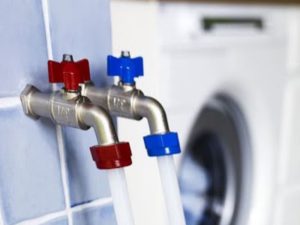 And yet now you can find a modern washing machine with two inlet hoses for hot and cold water.
Hot water source in the house. What kind of water enters your washing machine.
If the previous cons did not dissuade you from connecting the washing machine to hot water, then it is worth talking about where the hot water comes from to the washing machine.
There are two ways to deliver hot water to the consumer. The first is through centralized hot water networks, such water will always be not lower than 50C and not more than 70C, which will lead you to all the problems that were described above. In addition, what if the hot water is turned off for repairs in the summer? Reconnect the washer?
But here is the second way, this is if your apartment or house has a local water heater, for example, a boiler with a boiler or a gas water heater. In this case, only cold water is supplied to you and is heated by a local heater, which means that its quality remains at the level of drinking, and not technical. But most importantly, you yourself can regulate the temperature of hot water during the washing process. That is, you will have to take on the role of automation, if usually washing machines heat the water themselves, then you will have to cool it yourself.
Understanding the washing process
In this case, it is worth separately understanding what the washing process is from the point of view of the temperature regime.
In the beginning, the fabric is soaked in cold water and here you will need to lower the temperature. Then, when the main washing process starts, raise the temperature of the water to the mode you have chosen, but rinsing is best done again in cold water, so the remnants of the powder are better removed.
If you have accepted all the cons, then here is a small instruction on how to connect the washing machine yourself.
You will need:
- Fluoroplated sealing material.
 - wrench.
- ¾ inch spacer rings made of silicone or rubber
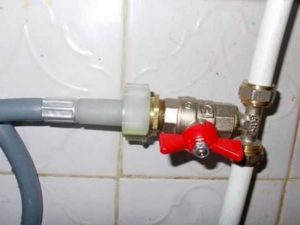
- main taps ¾ tees in the amount of two pieces, with a side outlet.
– adapters also ¾ inch
- and flow filters, also ¾
Before installation, it is necessary to screw the filters onto the tees to eliminate the risk of contamination of the washing machine with dirt from the pipeline.
Then close both risers with hot and cold water.
Find under the mixer the junction of the main pipe and hoses that go to the mixer. Disconnect them.
Screw the tees on both pipes, adapters may come in handy here, they should be included.
Then screw the hoses from the mixers to the tees, then add the intake hoses, for this, use the fluoroplated sealing material.
Now we connect the water and the washing machine. But it is important that all connections are tight and there are no leaks. Check everything carefully!
Important: If it was not possible to connect the washing machine on your own, it is better to use the services of a master.
Disappointing conclusions
What do we end up with? You can connect a washing machine to hot water, but the quality of washing will inevitably deteriorate, and you will also have to constantly check the condition of the washing machine. Will you save on electricity? Only if you have a local water heater, because the price for hot water can also be high, but even then you will have to manage the washing process for automation. Whether the savings is worth the effort is up to you, of course.




Capitalism is such a thing when you do not what people need, but what you need, but at the same time you convince them that this is exactly what they wanted. So here. The only reason is the simplification of the design. The manufacturer does not need to solve your money saving problems. He needs to sell you beautiful junk at the maximum price with a minimum of costs. For example, the excuse about improper washing due to the content of caustic soda in hot water is generally enchanting. In the days of our mothers and grandmothers, they washed it with it. They just washed it with it, because it is a terrible alkali. And all detergents are alkaline. And she can also clean pipes from blockages, wash burnt dishes, wash off old paint, clean ceramic plates from old grease, clean tiles in the kitchen and much more. But it is too cheap and simple.And now they sell you all sorts of calgons, anti-fats, moles and supercleaners. The same eggs only on the side. There is also a song about water purification. No fine filters needed for washing. There are no less impurities in cold water than in hot water. From the point of view of equipment protection, hot water is even more preferable, since it contains additives against corrosion and scale. Phosphates and soda. I already wrote about soda. Phosphates are found in laundry detergents. And Coca Cola accustomed the people to the taste of a solution of phosphoric acid. And nothing dies. So it's all manufacturers' excuses. It is really easier for them to heat up cold water for the desired washing mode than to program their brains to mix cold and hot.