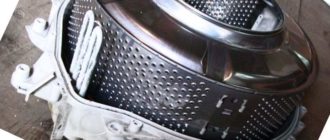
 The most common problem in the operation of washing machines is a partial or complete breakdown of the rotating drum, due to which it starts to rotate more slowly or stops moving altogether.
In this case, it is important to first determine the cause of the malfunction, which will show what further actions should be taken.
Causes of drum malfunction
The most common reasons why the drum does not rotate in the washing machine include:
- Overloading the laundry tank.
- Motor drive belt damaged.
- Electric motor breakdown.
- Defective carbon brushes in the motor.
- The imbalance of the drum mechanism.
- No voltage supply
We determine the cause of the breakdown ourselves
Spinning but tight
Alleged Causes:
- Loading with linen.
- The imbalance of the drum mechanism.
- The presence of foreign objects in the tank and in the filtration system.
 If your drum mechanism rotates tightly, then the almost harmless factor in the consequences is a completely understandable factor. overload.
In order to find out if this is true or not, open the instructions for your washing machine and read what all laundry load for your washing machine maximum.
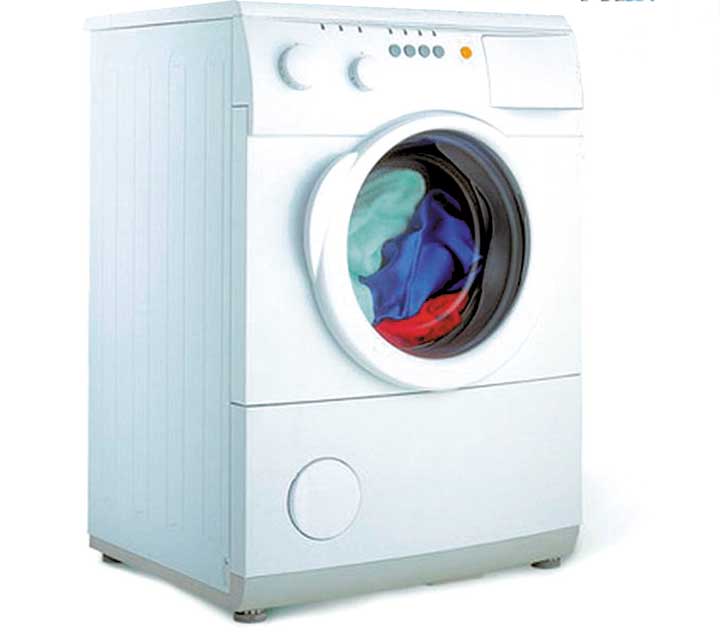 If there is scroll speed issues drum is already at the spinning stage, then perhaps the problem lies not in overload, but in tank imbalance, at which the washing device cannot gain the required number of revolutions for high-quality work. To do this, you need to know whether the laundry is evenly distributed around the entire perimeter of the tank.
And the most common reason is foreign objects in the tank and drum mechanism. This can interfere with the normal operation of your washing device. Even due to such a seemingly insignificant reason, the drum of the washing machine may begin to rotate tightly.
Doesn't rotate at all
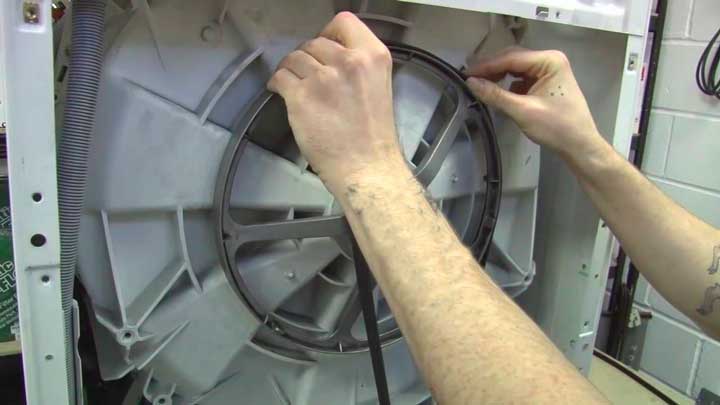 Suggested reasons:
- Decommissioning drive belt.
- Broken carbon brushes.
- Motor damage.
When the washer begins its wash cycle with an unbalanced tank or simply overloaded laundry, a situation may well occur when the drive belt may come off or even break. In this case, you can replace and tension the drive belt yourself.
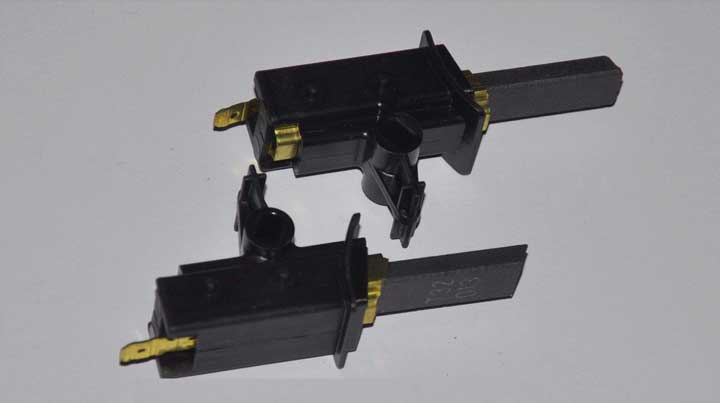 If the problem lies in broken carbon brushes, then at least one of them will be charred. If the brushes are worn out, then you can change them yourself. To do this, you need to remove the electric motor and after this procedure, replace the already worn brushes with new parts.
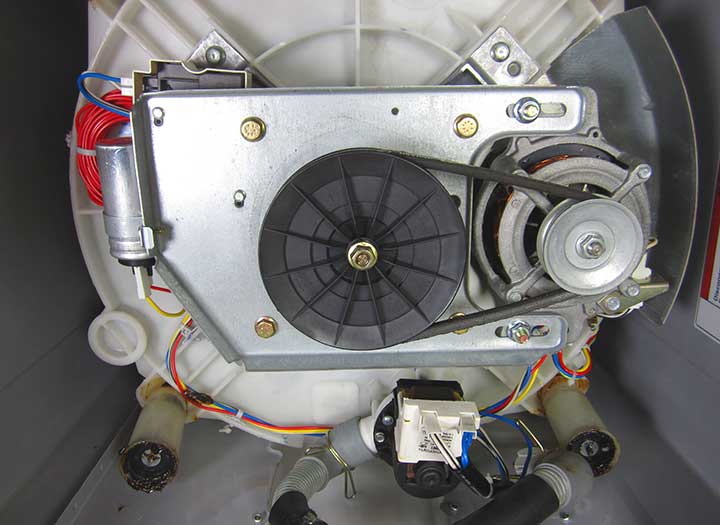 There is also a possibility that engine malfunction will already be the basis for the poor performance of the drum or even its complete breakdown.
Short circuit or a break in the windings are quite rare situations that users of household appliances have had to deal with.
In this case, it is not recommended to try to fix something yourself. Better entrust it to professionals.
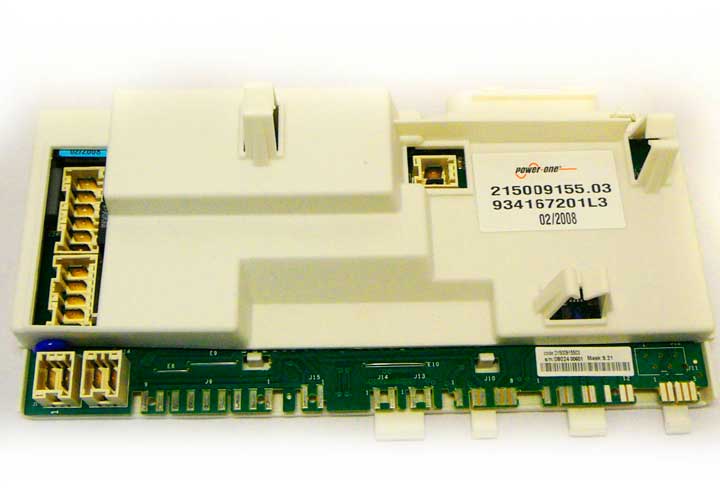 Sometimes the washing machine tub does not rotate tightly and for some reason no voltage supply. As a rule, if electricity does not reach the motor winding, then the drum will not start its movement. It is likely that there is a violation of the electrical circuit, and perhaps one of the software modules has failed.
Master in the service center will tell you the real reason after a complete diagnosis of the washing device. And in order to prevent this from happening, you should monitor the power supply so that there are no short circuits and power surges. To do this, we recommend purchasing a voltage stabilizer.
How to prevent possible damage to the washing machine drum
When using the washing machine, follow important rules so that you can protect the drum mechanism from possible damage.
 Check the pockets of all clothing before loading it into the tank.
- Do not load more laundry than the maximum capacity of the washing machine.
- Do not forcibly rotate the drum mechanism if it suddenly fails.
- Use all kinds of drum descaling products with extreme caution.