 Modern washing machines have minicomputers inside. They control washing without human intervention. If a malfunction occurs, this computer shows an error code on the display. From it you can find out the cause of this malfunction. Different washing machines have different errors. The Samsung washing machines in question use alphanumeric designations.
Error h1 on a Samsung washing machine occurs very often.
What is an H1 error?
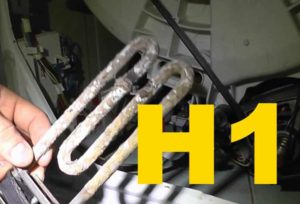
What does such an error mean? We'll figure out. If your Samsung washing machine showed an h1 error, you must immediately stop using it and decipher the error. Continued use will cause serious damage or may permanently break the washing machine. Depending on the year of production and the specific model, the error code looks like H 1, H 2, HO, HE 1, NOT 2. In essence, this is a single error indicating a problem with water heating. The first thought is that the problem is in the heating element, you need to remove the cover and check it. Don't rush to do it.
How to fix the H1 error? Before taking any action to repair the washing machine, you need to find out the cause of this problem and understand the device of the Samsung washing machine.
The first subtlety is that the heating element in the Samsung “washer” is not located behind the wall, like many washing machines, but in front of the tank.To get to the heater, you need to remove the front wall of the device, and with it the control panel. When diagnosing, a multimeter is useful. But first you need to find out the causes of the error.
Important! Before opening the washing machine, do not forget to unplug it from the mains.
Question details
Causes of the H1 error
Error h1 on a Samsung washing machine may appear in the following cases:
 - if the water is not heated before washing;
– if the water temperature becomes too high during washing;
– if the steam starts to overheat while drying the laundry.
These processes have several causes. The most common ones are:
- the temperature sensor is broken;
- shorted the wires in the heating element;
- the heating element itself broke;
– all elements are operational, but the overheating protection of the device has turned on by mistake.
Let's look at each reason in more detail.
Short circuit (break) of wires or problems with the heating element
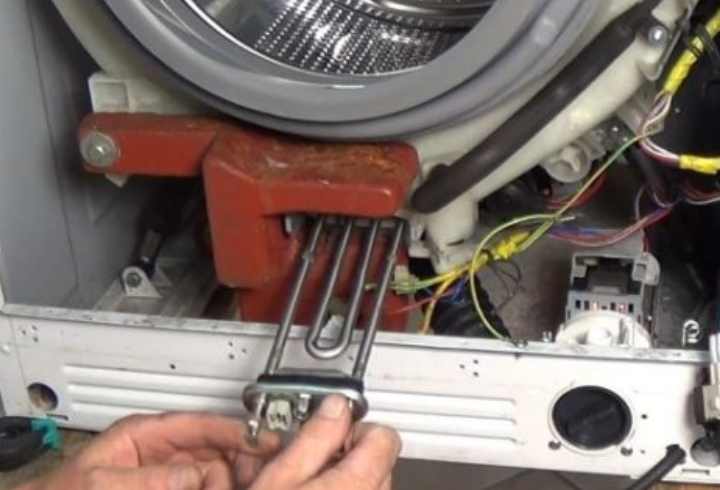
After you have gained access to the heating element, you need to check its serviceability. Don't forget to remove the protective cover on the heating element. It is located in a niche directly under the hatch. Do a visual inspection first.
1) There are 2 contacts under the protective cover. Wires are attached to them. Carefully inspect these wires and contacts. Perhaps they oxidized and therefore the contact was lost. Check wire attachment. They shouldn't hang out.
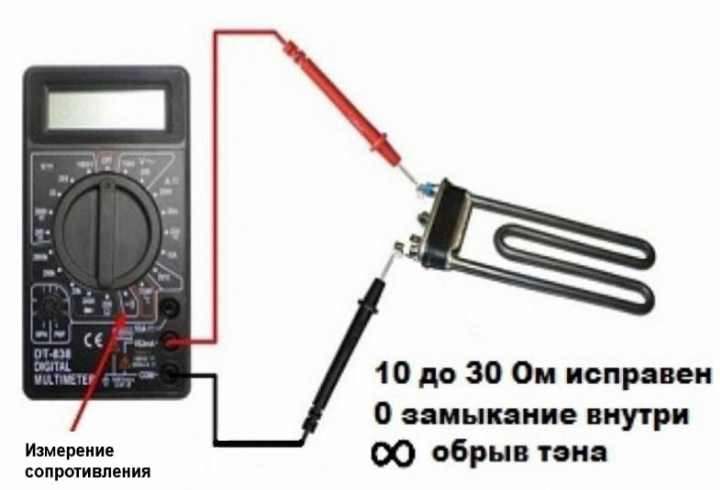
2) The heating element itself could have deteriorated from a power surge. To check this, use a multimeter. But first disconnect the wires from the heating element. The voltage measurement will be in ohms. The normal value for the operation of the heater is 27-30 ohms. If there is at least some deviation, this is a signal of a problem. A value of 0 indicates an internal closure. If an infinity sign appears, then there is a break.If you saw a value of 1, then be sure that the heating element burned out.
3) Measure the resistance on the wires coming out of the washing machine. If the readings are approximately the same, then there are no problems with nutrition. If the deviations are significant, then you need to look for the place of damage to the wire. A broken wire will need to be replaced.
This operation is simple and will not cause problems.
But we will describe in more detail how to replace the heating element:
1) There is a nut between the contacts that we checked at the beginning. It needs to be unlocked. Now the heating element can be obtained.
2) We take the contacts and begin to pull it towards ourselves, while swinging a little from side to side.
3) Pulling out the old ten, you will see a hole that leads to the tank. The tank itself must be cleaned of scale and other debris. An old toothbrush will do for this task. Stick it in the hole and clean the tank.
4) We clean the contacts with a special tool to exclude the possibility of their oxidation.
5) Lubricate with soap, for example, the edges of the hole to reduce resistance. Carefully insert a new serviceable heating element into this hole. Remember the rubber band of the heating element. It cannot be displaced and, moreover, damaged.
6) Next, we connect the wires back, put the protective pad and collect everything back.
7) Having launched a test wash, we make sure that the washing machines are working.
Problems with the temperature sensor
If the heating element and wires are in good condition and there is no damage, and the washing machine still does not work early, then the reason may lie in the temperature sensor. Samsung washing machines use thermistors as these sensors.
The thermistor is located directly on the heating element.
1) First, remove the cover in front of the washing machine and the heating element protection cover.
2) Right on the heating element itself, you will see a black (sometimes gray) plastic element.
3) Check the resistance with a multimeter.Its normal value is 35 kΩ. If there is a deviation from this value, the sensor will need to be replaced.
4) Replacing the temperature sensor is easy. It is necessary to disconnect all contacts from it and carefully remove it. You can use a flathead screwdriver to pry it off. Then put a new element in its place. It is important to remember where which contact was attached and not to confuse them during installation.
Overheating protection activated
Overheating protection in Samsung washing machines is quite straightforward. Inside the heating element there is a spiral connected to its contacts with a fusible material. If the coil overheats, then this fuse melts, breaking the circuit, and the coil remains intact. It remains to replace only the sensor. But there's a problem. Not all washing machines have this feature.
There are two options:
1) The sensor is inseparable from the heating element. You will have to change the entire heating element, as described above.
2) The safety elements of the heating element are made of ceramics. In case of overheating, they simply break off, which also breaks the circuit.
We act like this:
- we find plastic rivets on the basis of the heating element and break them off;
- the ceramic fuse will fall off and need to be cut, for example, with a hacksaw and put in place;
- damage to the body of the heating element is glued with heat-resistant glue;
- we check the resistance with the device and install all the elements in their places.
- Checking the washing machine.
Prevention of H1 error on washing machines
We figured out how to fix the H1 error on Samsung washing machines. But how to avoid it?
1) Watch your water quality. Bad water contains impurities that form scale on the heating element. Install a water filter. This will save you from this problem.
2) When repairing a washing machine, use quality parts. This will increase its service life and eliminate frequent breakdowns.
3) Do not neglect the operating conditions of your washing machine. They are listed in the instructions for it.
4) Regularly clean the inside of the washing machine from scale. There are special tools for this. This will increase its service life.
If an H1 error appears on your Samsung washing machine, you can fix it yourself. The main thing is to listen to the advice and do everything according to the instructions. But illiterate intervention will bring more problems than good. It is up to you to decide to do everything yourself or turn to professionals.
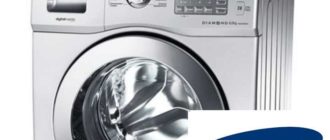

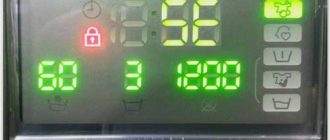

Error H1 appears at 15 minutes of operation of the washing machine.The heating element and temperature sensor are OK. The heater relay is OK. Can the darlington matrix, which turns on the heater relay, fail? Washing programs at 30 and 40 gr. are worked out without errors, and starting from 60 gr. washing machine stops at 15 minutes. What's this? Firmware failure?