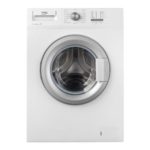
Having bought a washing machine, it is not necessary to call the master to install it. But if you still do not dare to do the work yourself, the information received will allow you to check the correctness of the work carried out by a specialist.
Location selection

This should be done taking into account the following factors:
- the presence of a flat floor;
- the presence of a water supply and sanitation system nearby;
- the ability to directly connect the device to the mains;
- the dimensions of the machine and the method of loading the laundry.
As a rule, for this they choose a bathroom, kitchen or corridor.
Preparing for installation
To protect against possible damage during transportation, the rotating elements of the device are fixed using fasteners:
- On the back wall of the device there are brackets necessary for rigidity. These elements also hold the electrical cord and hose.
- Bars are located between the body of the device and the tank. To remove them, just tilt the washing machine forward slightly.
- Bots are used to fix the drum. The plugs included in the package are inserted into the remaining holes.
Installation and alignment
The base must be strictly horizontal, stable, have a dense structure and not create vibrations. Horizontal installation is determined by the top panel. The deflection angle is allowed at two degrees.To check if the washing machine is installed correctly for washing, you should try to swing it. In the absence of free play or the coincidence of the amplitude for different diagonals, we can conclude that the process was carried out correctly.
Water connection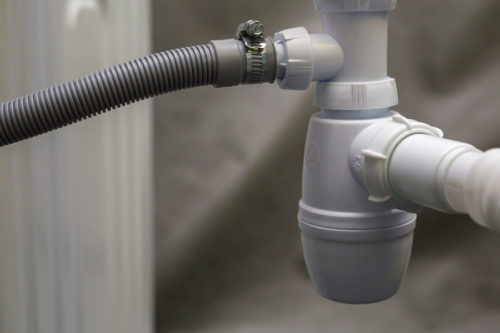
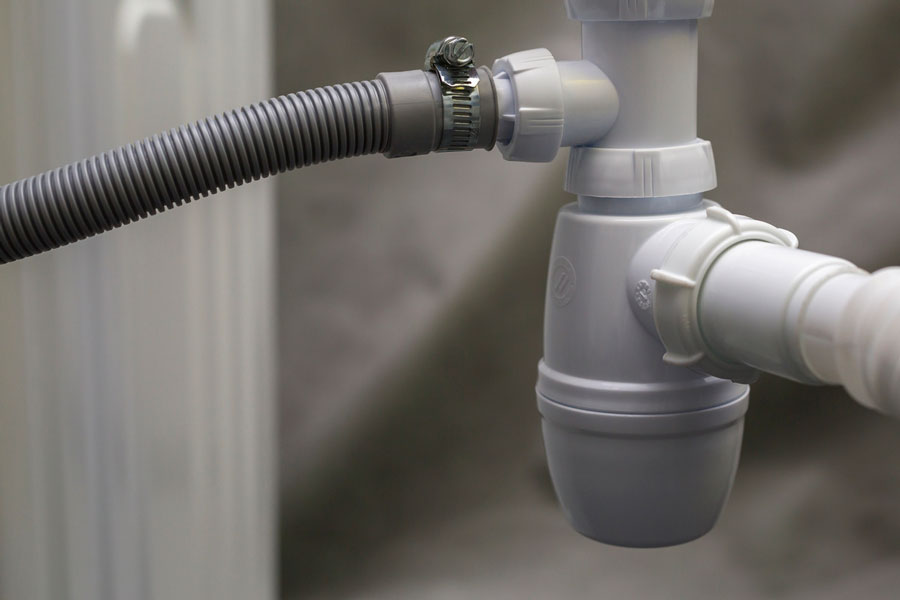
The household appliance is equipped with hoses, but their size is not always sufficient. Therefore, extension cords may be needed. The master may also ask to purchase a valve or a special tap, tee.
The washing machine is connected to the water supply in one of the following ways:
- pipe insert;
- connection to the mixer;
- connection to the entrance to the toilet bowl.
If the installation of the washing machine will be carried out in a country house where there is no centralized water supply, you can use an alternative solution. To do this, a volumetric water tank rises to a height of at least one meter and a hose from the apparatus is connected to it. When using the device, it is necessary to add water to the container in a timely manner.
Sewer connection
Drainage of dirty water can be done in two ways:
- through a special hose directed to the bath or toilet (usually used temporarily);
- through a stationary drain (through a siphon with a separate outlet or through a hose led directly into the sewer pipe).
Electrical connection
When choosing an outlet, attention should be paid to models with a high degree of protection. It is desirable that these be products with a ceramic base and a lid that protects against moisture. Extension cords, adapters should be avoided, as additional connections can provoke an increase in temperature in the contacts and lead to damage to the washer.
Test inclusion
When checking the correct installation, the washing machine should be started without laundry, alternately in different modes.
In doing so, attention is drawn to:
- the speed of water intake into the tank and the correctness of the drain;
- full heating of the liquid;
- uniform rotation of the drum and the required speed during the spin cycle;
- no leaks.
During operation, the washing machine should not make uncharacteristic sounds.