 The drain system in the washing machine needs regular maintenance and control.
If this is neglected, you may encounter a situation where it refuses to drain water during the washing process. What to do to avoid such a malfunction?
The Importance of Cleaning the Drain Hose
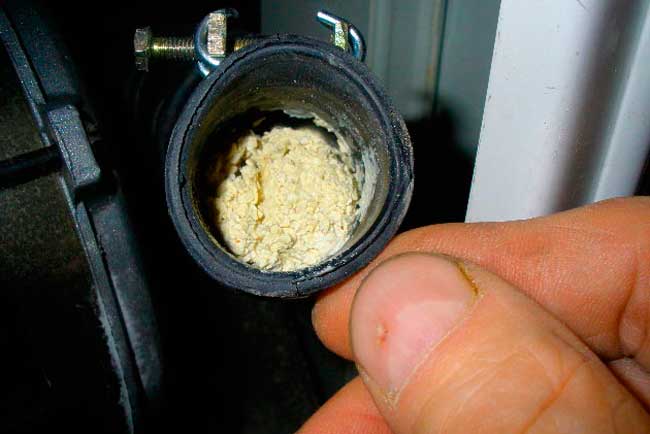 If you do not follow the drain system, after a while the water will not be able to pass through the thickness of the dirt. Hence, there are problems with blockage, which disrupts the performance of the washing machine. That is why the equipment needs preventive cleaning of the drain hose.
Some people believe that the process of cleaning the drain hose is very simple and does not require special skills or experience.
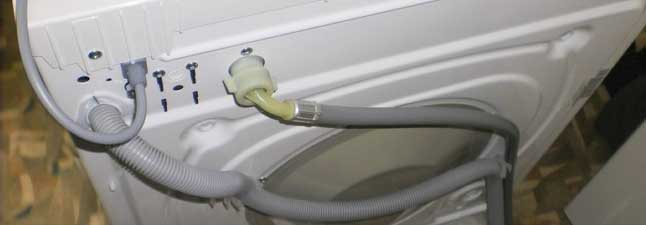 However, first of all, you need to at least know how to remove drain hose and in general, where is the place of its connection inside the technique. Basically, the hose is connected directly to the pump inside and disassembly of the washing machine is required.
Not all models of washing machines are designed in the same way and the ways in which you can get to the drain hose are varied.
How to Disconnect the Drain Hose in a Front Load Washing Machine
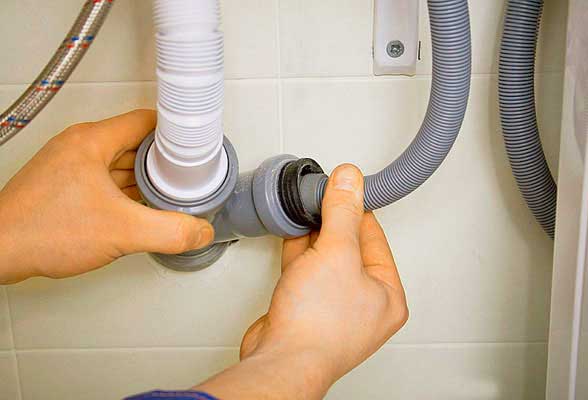
After that, thanks drain filter get rid of the water left in the washing machine. It remains to disconnect the drain hose from the siphon and the sewer pipe.
Armed with pliers with different screwdrivers, you can begin the process of disassembling the washing machine. Consider models in which you can get to the drainage hose through the bottom of the equipment.
There are models where the bottom is completely absent or a special pallet is fitted instead of it, held on by bolts. If you have Candy, Ardo, Beko, Indesit washing machines, LG or Samsung, then there is a high probability that method "through the bottom" For you. So:
- The panel is removed from below.
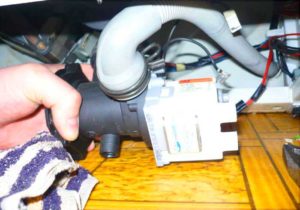
- The bolts that hold the filter are unscrewed.
- The machine is laid on its side (preferably on some kind of rag).
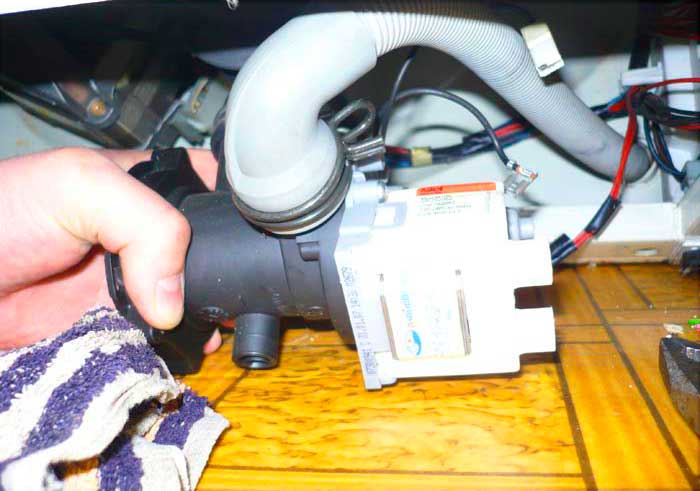
- The clamp is unclenched with pliers, and the hose is unhooked from the pump.
- It remains to disconnect it from the washing machine itself.
In washing machines, Zanussi and Electrolux machines access to the drain hose begins with the removal of the rear cover of the unit, not the bottom. The sequence of actions will be as follows:
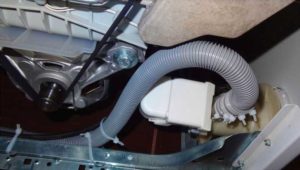 The latches that hold the drain hose closer to the body are released.
- The inlet hose is unscrewed from valve.
- The top cover of the housing is removed, bolted from the back.
- The back cover is removed, the bolts are first unscrewed from it.
- The clamps are loosened and the drain hose is released.
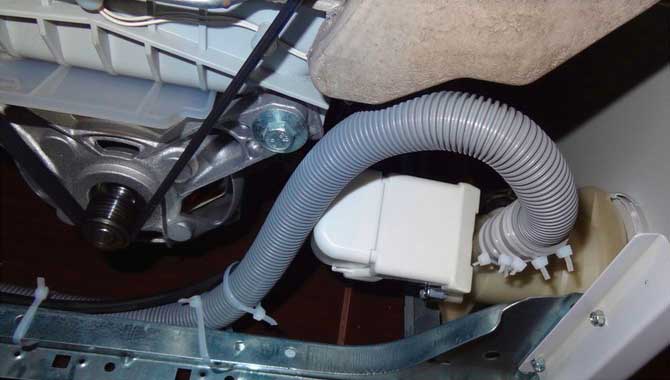
And the German models are designed in such a way that you can only get to the drainage hose through the front cover of the washing machine.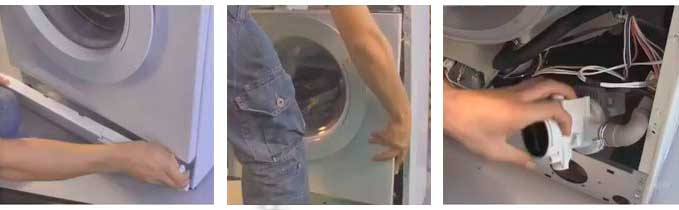
- On the front of the equipment, the sealing gum is removed along with the clamp.
- Pulled out compartment for detergents.
- We get rid of the bottom panel of the washing machine for a while and unscrew the bolts under it.
- The hatch block is removed.
- The front cover of the equipment is removed.
- The clamps are released and the hose is pulled out.
How to Remove the Drain Hose in a Top Loading Washing Machine
Access to the drain hose in a top-loading washer is slightly different. And to disconnect it from the pump you have to disassemble the side panel of the unit. How to do it?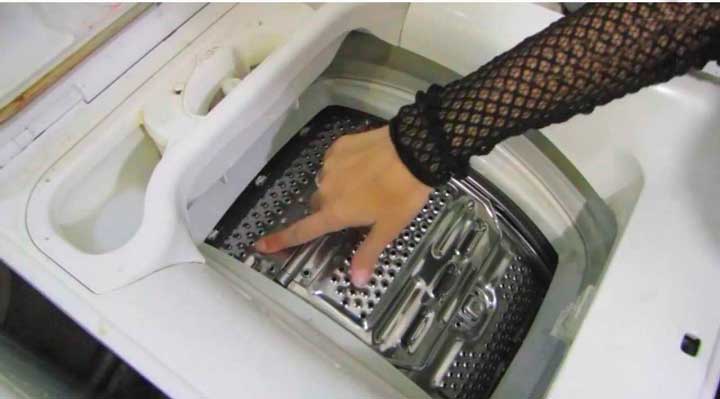
- The panel on the side is held on by bolts, so they need to be unscrewed and the cover removed.
- There are clamps on the drain hose that need to be unclenched.
- It remains to pull the hose.
Everything is simple. If you need to replace the drain hose, then the algorithm of actions is exactly the same, only a new one is put in place of the old part.
https://www.youtube.com/watch?v=tH8Hv6UXCA8
How to clean the drain hose in the washing machine
After the process of removing the drain hose, it would be good to clean and inspect it. How to do it?
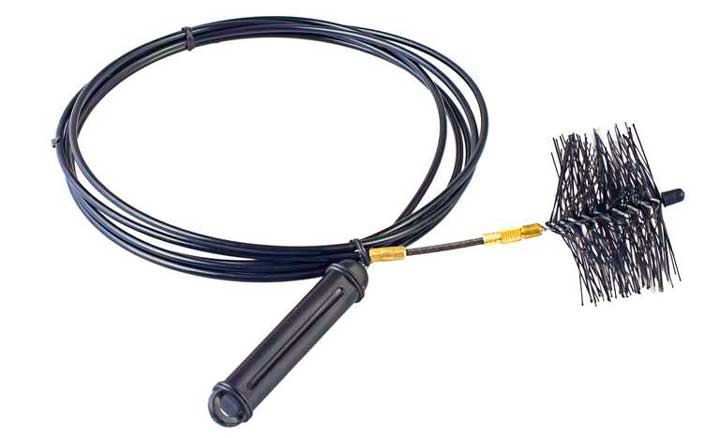 You will need a Kevlar cable. Who does not know, this is a cable made of high-strength polymer fiber, with enormous practical possibilities. Despite the fact that it is not metal, its strength is very high and the weight is very light. Here is such a cable of small diameter (thin) with a brush at the end you will need to clean the drain hose.
It will perfectly cope with the soapy coating inside the hose. It is necessary to insert the cable into the hose in one direction or the other.
After that, the hose is flushed with water under pressure for 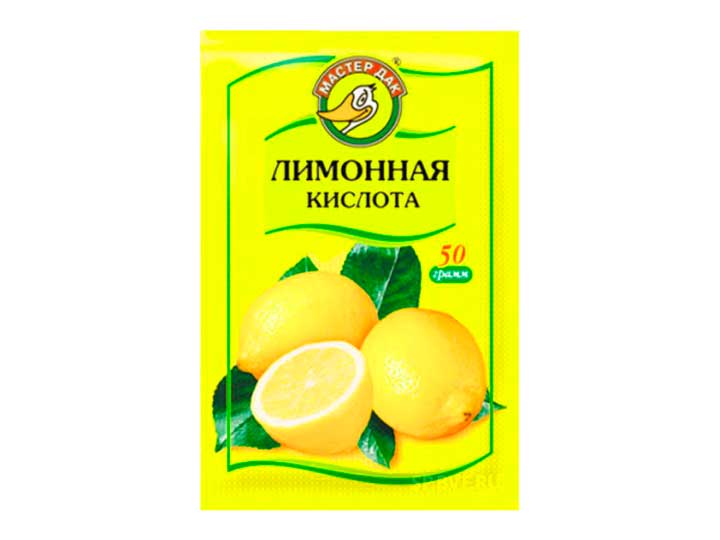 a few minutes and is fixed in place. The washing machine is assembled in the reverse order.
After assembly, run the wash program at 60 degrees using citric acid, which rid all tubes of the unit from scale. You can replace the acid with Antinakipin.
Partial blockage of the drain hose
Would need:
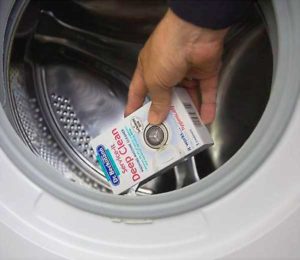 buy a washing machine cleaner that matches its brand and also purchase baking soda;
- pour the agent in the required volume into the drum and add soda about 150 gr.;
- run a light wash or cotton program without laundry.
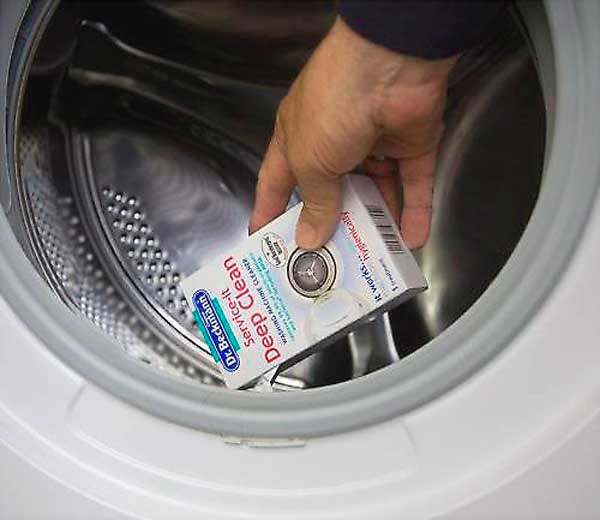
This method does not always help the first time, in this case it is possible to repeat the cleaning. The same procedure can be carried out to prevent blockage, which will undoubtedly extend the service life at the same time remove extraneous and unpleasant odors.
Causes of clogged drain hose
Therefore, the hose can only become clogged with small fibers from woolen items, hair, threads and settled soapy water. The smell at the same time arises unpleasant and is the first sign of blockage of the drain system.
What can be done to avoid such trouble?
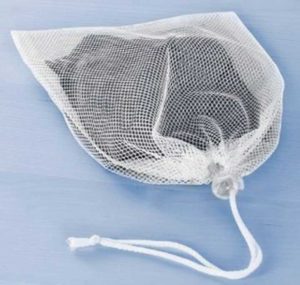
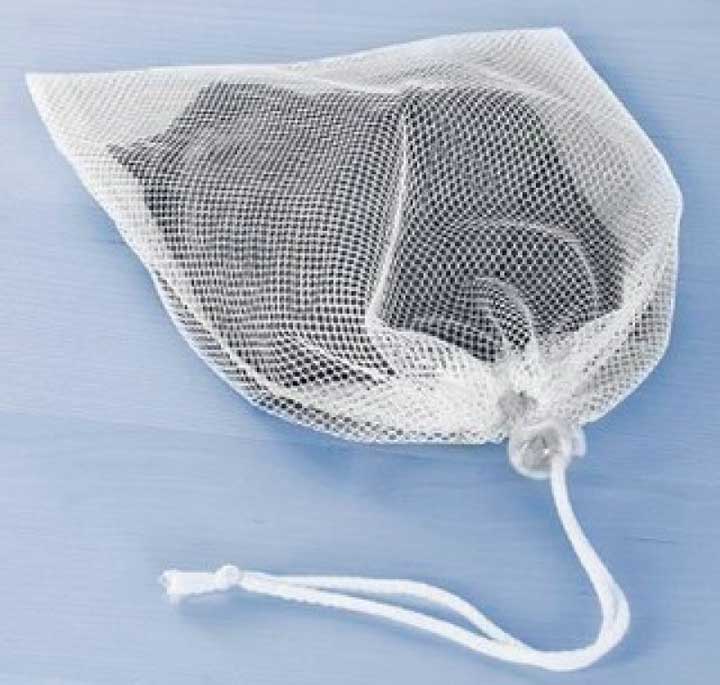
- Use a laundry bag.
- Soften water using special products.
- Clean the washing machine from scale for preventive purposes.
- Strictly use washing machine powders.
- Before loading laundry into the drum, remove foreign objects from pockets.
There is nothing difficult in the process of cleaning the drain hose of the washing machine.Any owner of equipment will be able to cope with such a problem on their own. The main thing is to follow the instructions.